








Introduction
In the landscape of modern industrial manufacturing and green energy, Neodymium-Iron-Boron (NdFeB) magnets stand as the undisputed “King of Magnets.” These strong magnet solutions are the silent powerhouses behind everything from electric vehicle motors to high-fidelity audio equipment. As industries push for miniaturization and higher efficiency, the demand for heavy duty magnets with extreme energy products—specifically the N52 to N55 grades—has surged.
However, procuring high-performance NdFeB magnets involves more than just picking the highest number available. It requires a nuanced understanding of magnetic properties, thermal stability, and manufacturing constraints. We will analyze the performance metrics of ímãs super fortes, compare the elite N52 and N55 grades, and provide a strategic framework for selection.
Why is NdFeB recognized as the strongest magnet?
NdFeB magnets are rare-earth permanent magnets with extremely high energy product, far stronger than traditional ferrite and Alnico. For the same size, their magnetic attraction is about 30–50 times that of ferrite. Significantly enhanced the performance of magnets. So they are known as super strong magnets.
Core Basic Knowledge: The Anatomy of a Super Strong Magnet
To make an informed procurement decision, one must understand what makes a strong NdFeB magnet perform. NdFeB is a type of rare-earth magnet made from an alloy of Neodymium, Iron, and Boron.
Chemical Composition and Structure
The standard crystalline structure is Nd2Fe14B. While Neodymium provides the high magnetic anisotropy, Iron provides the high saturation magnetization. Small amounts of other elements like Dysprosium (Dy) or Terbium (Tb) are often added to improve “coercivity”—the magnet’s resistance to demagnetization at high temperatures.
Key Performance Parameters
When reviewing a data sheet for a powerful N52 NdFeB magnet, you will encounter four critical metrics:
- Remanence (Br): Measured in Gauss (G) or Tesla (T), this indicates the magnetic field strength remaining in the magnet after the external magnetic field is removed.
- Coercividade (Hcb): The intensity of the external magnetic field required to reduce the magnetization to zero.
- Intrinsic Coercivity (Hcj): The absolute ability of the magnet to resist demagnetization.
- Maximum Energy Product (BH)máximo: Measured in MegaGauss-Oersteds (MGOe), this represents the total magnetic energy stored. This is the number used in “N52” or “N55.”
Classification: Sintered vs. Bonded
- Sintered NdFeB: The most common type for heavy duty magnets. Powder is pressed and sintered into a solid block. It offers the highest magnetic properties but is brittle and requires coating.
- Bonded NdFeB: Magnetic powder is mixed with a polymer binder. These can be molded into complex shapes but have significantly lower magnetic strength compared to sintered versions.
Deciphering the Grades: From N35 to the Powerful N52 NdFeB Magnet
When sourcing, you will encounter alphanumeric codes. Understanding these is the foundation of strong NdFeB magnet selection skills.
The Magnetic Strength (The Number)
The number represents the Mega-Gauss Oersteds (MGOe) of the material.
- N35 – N40: Standard grades, cost-effective for general consumer goods.
- N42 – N48: High-performance grades used in industrial machinery.
- N50 – N55: The pinnacle of strength. A powerful N52 NdFeB magnet is often the go-to for applications where space is limited but maximum flux is required.
The Temperature Resistance (The Letters)
Standard NdFeB magnets lose magnetism at high temperatures. To prevent demagnetization, specific elements like Dysprosium (Dy) are added.
| Suffix | Max Operating Temp | Common Applications |
| (No suffix) | 80℃ | Consumer electronics, office supplies |
| M | 100℃ | Standard industrial motors |
| H | 120℃ | High-speed sensors, automotive parts |
| SH | 150℃ | EV traction motors |
| UH | 180℃ | Aerospace and heavy industrial pumps |
| EH | 200℃ | Extreme environment energy sectors |
Core Focus: The N52 to N55 Procurement Deep Dive
When your application demands the absolute maximum force in the smallest possible footprint, you move into the territory of N52, N54, and the elite N55 grades.
N52 vs. N55: Understanding the Performance Gap
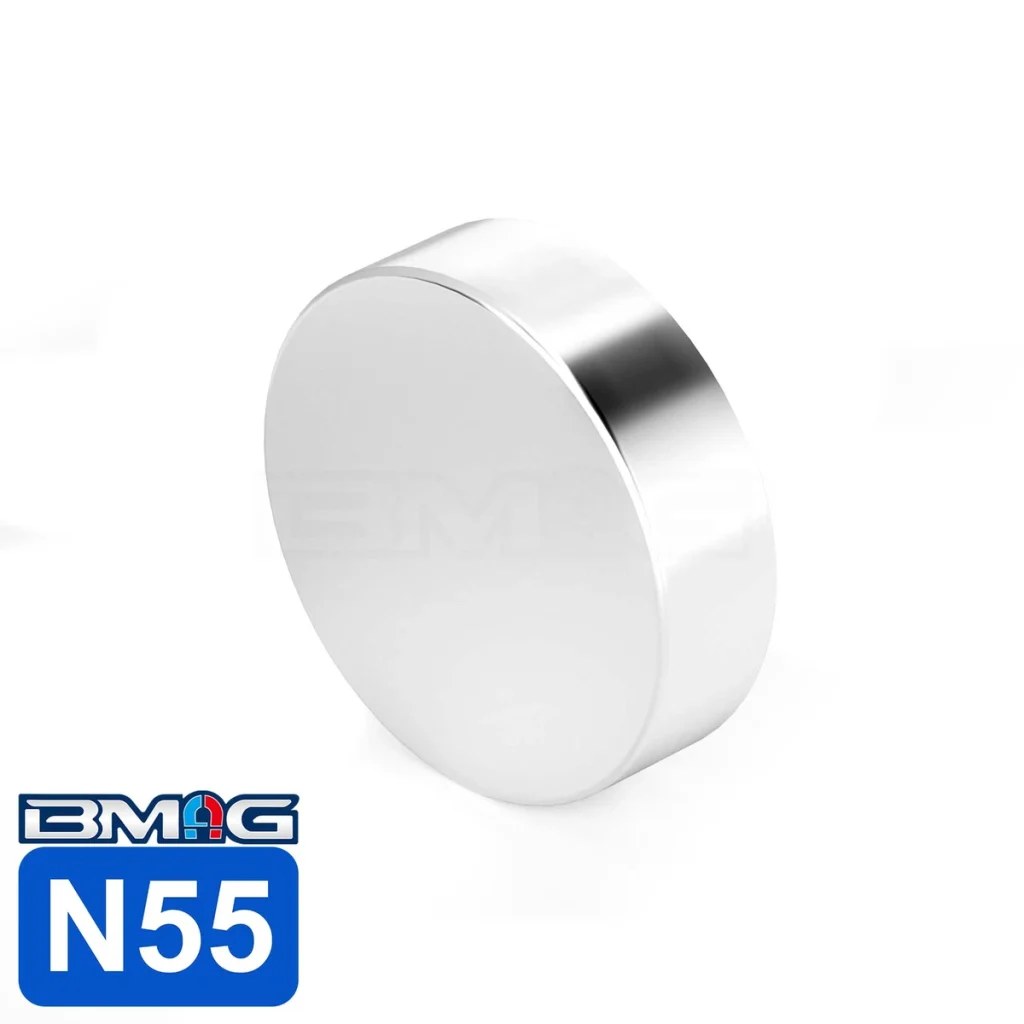
For many years, N52 was considered the theoretical limit for commercial NdFeB magnets. However, advances in grain boundary diffusion (GBD) and raw material purity have pushed the boundaries to N55.
| Nota | Remanence (Br) | Coercivity (Hcj) | Energy Product ((BH)max) |
| N52 | 1.42–1.47 T | ≥ 11 kOe | 50–53 MGOe |
| N54 | 1.45–1.49 T | ≥ 11 kOe | 52–55 MGOe |
| N55 | 1.46–1.51 T | ≥ 10 kOe | 54–56 MGOe |
Strategic Insight: While N55 offers roughly 5-8% more magnetic energy than N52, it often comes with a higher price premium and slightly lower temperature resistance. For 90% of high-performance applications, a powerful N52 NdFeB magnet provides the best balance of cost-to-performance.
Step-by-Step Selection Guide for Procurement Super Strong Magnets
Navigating the strong NdFeB magnet selection skills requires a systematic approach:
- Define the Working Environment: Will the magnet be exposed to heat? Standard N-grades are rated for 80°C. If your application exceeds this, you must look at M, H, SH, UH, or EH grades, which sacrifice some (BH)máximo for thermal stability.
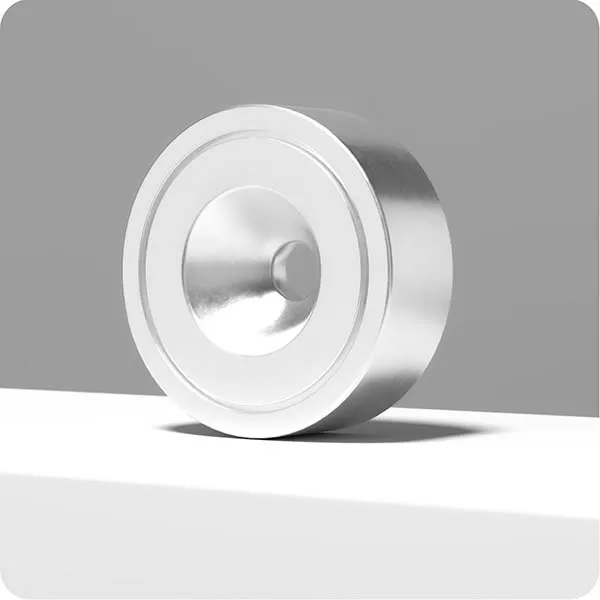
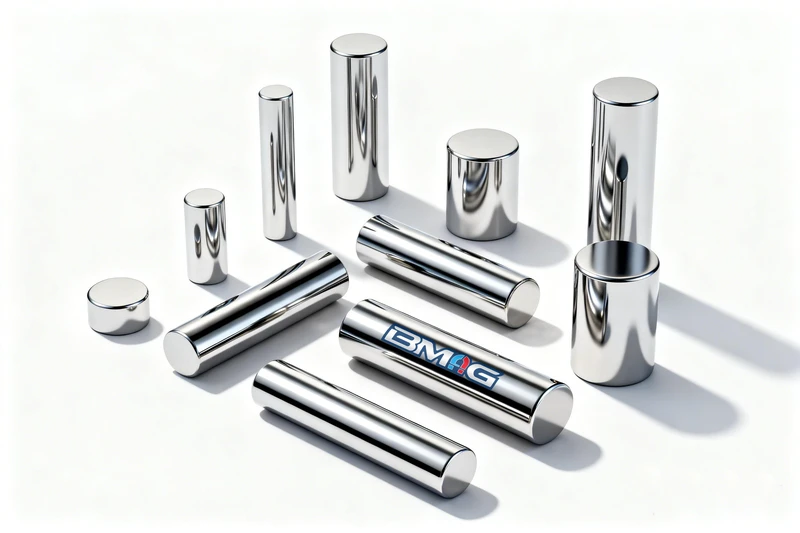
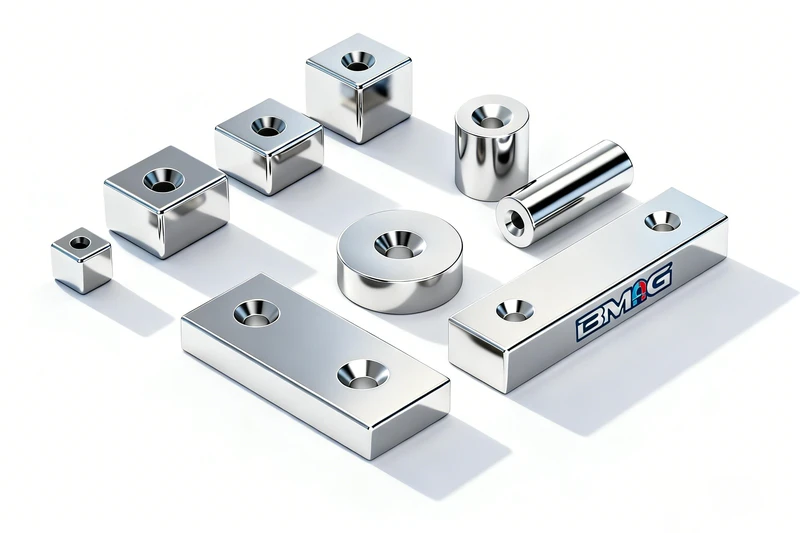
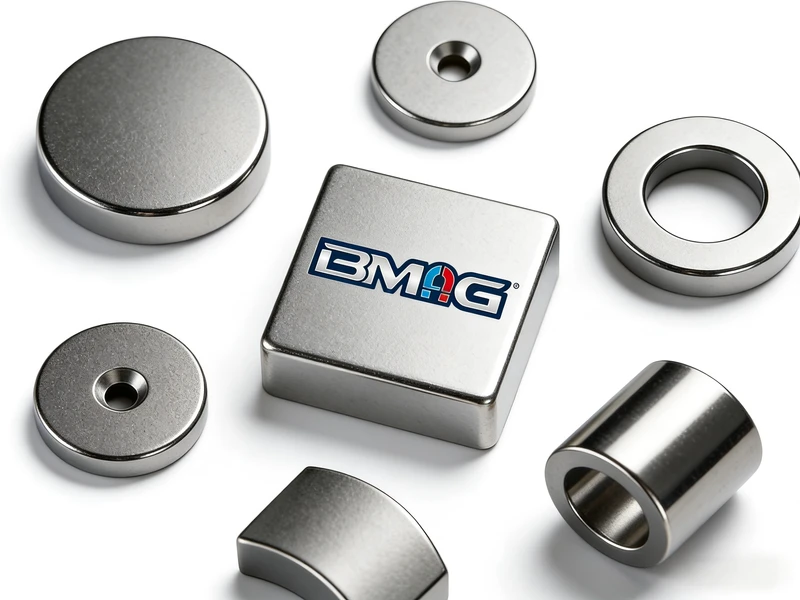
- Shape and Tolerance: High-grade magnets like N55 are harder to manufacture in complex geometries. Stick to blocks, discs, or rings where possible to maintain structural integrity.
- Coating and Corrosion Resistance: NdFeB is highly susceptible to oxidation. Common options include:
- Supplier Screening & Certification: Ensure your supplier adheres to ISO 9001 e IATF 16949 (for automotive). Request RoHS e REACH compliance reports to ensure environmental standards are met.
Application Scenarios for High-Grade Magnets
The transition to ímãs super fortes like N52 and N55 is driven by the need for “Smaller, Lighter, Stronger” components.
- New Energy Vehicles (EVs): High-grade NdFeB is used in permanent magnet synchronous motors (PMSM) to increase torque density and reduce vehicle weight, directly extending driving range.
- Aerospace and Defense: Used in actuators and sensors where every gram of weight saved equals thousands of dollars in fuel efficiency.
- Consumer Electronics: Think of the “MagSafe” tech or high-end headphones. These require ímãs super fortes that are thin enough to fit in a smartphone but strong enough to hold a charge.
- Industrial Automation: High-speed robotic arms utilize N52 magnets for precision movements and high-holding force in compact grippers.
Procurement Strategy: Strong NdFeB Magnet Price Factors
Navigating the Preço do ímã NdFeB de alta potência landscape requires an understanding of the global supply chain. Because Neodymium and Praseodymium (PrNd) are rare-earth elements, prices can be volatile.
Key factors influencing cost include:
- Raw Material Market: Fluctuations in rare-earth mining and export policies.
- Grade Complexity: Higher “N” numbers and higher temperature ratings (like AH or EH) require more expensive additives.
- Coatings: Since NdFeB is prone to corrosion, coatings like Ni-Cu-Ni (Nickel), Zinc, or Epoxy add to the final cost.
- Tolerances: Precision-ground magnets for aerospace will always command a premium over standard hardware-grade magnets.

Professional NdFeB Strong Magnet Selection Skills
To ensure you are getting the best value for your project, follow this technical checklist:
- Define the Environment: Will the magnet face moisture? (Choose Epoxy coating). Will it be near high heat? (Choose SH or UH grades).
- Calculate the Magnetic Circuit: Don’t just buy a strong magnet because it’s powerful; ensure the flux density at a specific distance meets your sensor or motor requirements.
- Check Orientation: Is it axially magnetized or diametrically magnetized? This is a common procurement error that can render a shipment useless.
- Verify Testing Standards: Request Salt Spray Test (SST) results for coatings and Hysteresisgraph data for magnetic properties.
Pro Tip: While N52 is the strongest, it is also the most brittle and temperature-sensitive. Often, an N45H grade provides a better balance of durability, heat resistance, and cost for industrial Super Strong Magnets.
Frequently Asked Questions (FAQ)
Qual é o ímã mais forte?
Os ímãs NdFeB são ímãs potentes. No entanto, eles vêm em diferentes classes, e números mais altos indicam melhor desempenho. Os ímãs N52, N54 e N55 da série NdFeB são os ímãs verdadeiramente mais fortes.
Como posso evitar que meus ímãs NdFeB oxidem?
Como o NdFeB contém altas quantidades de ferro, ele se oxida facilmente. A melhor forma de prevenção é escolher o revestimento adequado (Ni-Cu-Ni ou epóxi) e garantir que o ímã não apresente lascas durante a montagem. Para ambientes extremos, considere a vedação hermética dentro de um invólucro de aço inoxidável.
Existe uma grande diferença de preço entre os ímãs N35 e N52?
Sim. Preço do ímã NdFeB de alta potência é determinada pela pureza do neodímio e pela complexidade do processo de sinterização. Os ímãs N52 podem ser 30-50% mais caros do que os ímãs N35, pois exigem matérias-primas mais refinadas e apresentam uma taxa de rendimento menor durante a produção.
Qual é a temperatura máxima de um ímã N52?
Os ímãs padrão N52 têm uma temperatura máxima de operação de 80°C (176°F). If your application reaches higher temperatures, the magnet will lose its strength. You would need to switch to an “N52H” or “N52SH” grade if available, though typically higher temp grades have slightly lower MGOe ratings.
Where can I purchase high-quality NdFeB magnets?
High-quality magnets should be sourced from regions with established rare-earth supply chains, primarily China, which controls the majority of global production. Look for suppliers who provide full material certifications and demagnetization curves for every batch.
Conclusion and Procurement Guidance
Selecting the right high-performance NdFeB magnets is a critical decision that impacts the longevity and efficiency of your engineering project. While N55 represents the peak of current magnetic technology, the powerful n52 NdFeB magnet remains the industry workhorse for high-end applications.
To ensure procurement success:
- Always prioritize thermal stability over raw magnetic strength if your device runs hot.
- Verify quality certifications (ISO, RoHS) to avoid project delays caused by material failure.
- Consult with engineers early to determine if a slightly lower grade (like N48 or N50) could provide a more cost-effective solution without sacrificing necessary performance.
As the industry moves toward green electrification, mastering the nuances of ímãs super fortes will be a competitive advantage for any procurement professional.