








In the manufacturing of high-performance sintered Neodymium-Iron-Boron (Nd2Fe14B) magnets, after completing the Powder Processing, we arrive at the third process. Critical transition from loose, micron-sized powder to a structured “green” compact. Without the precise application of high-intensity magnetic fields and mechanical pressure, the material would lack the directional power required for modern industrial applications.
This article explores the principles of magnetic anisotropy, the mechanical nuances of transverse and isostatic pressing, and the protective measures required to preserve the integrity of the unsintered magnet.
1. The Principle of Magnetic Anisotropy
The primary reason sintered NdFeB is the world’s strongest permanent magnet is that it is anisotropic. At the atomic level, the NdFeB crystal has a specific direction—known as the Easy Axis or C-Axis—along which it can be magnetized most effectively.
When the nitrogen jet-milled powder arrives at the pressing station, each individual particle is a single crystal. However, these particles are oriented randomly. If we press them without an external influence, the resulting magnet would be isotropic—its magnetic fields would cancel each other out, resulting in a weaker product. To achieve maximum Remanence (Br), we must force every individual grain to point its C-axis in the same direction.
2. Magnetic Field Alignment: The Science of the 3.0T Magnet Field
To align these microscopic grains, BMAG utilizes specialized NdFeB magnet pressing equipment integrated with powerful electromagnets.

The Process
The fine powder is loaded into a non-magnetic mold cavity. Before mechanical pressure is applied, the machine generates a high-intensity magnetic field, typically ranging from 1.5 Tesla to 3.0 Tesla. This pulse of magnetic energy exerts a torque on every particle, rotating them until their easy axes are perfectly parallel to the external field lines.
Precision here is paramount. Any turbulence in the powder or fluctuation in the magnetic field during this millisecond window will result in “misalignment,” which directly lowers the (BH)max (Maximum Energy Product) of the finished magnet.
3. The Pressing Process: TP vs. CIP
Once aligned, the powder must be compacted to a “green” density (roughly 50–60% of the final density) to maintain its shape during the journey to the sintering furnace. BMAG employs two primary methods depending on the required magnetic performance.

Transverse Pressing (TP)
In Transverse Pressing, the mechanical pressure is applied perpendicular to the direction of the magnetic alignment field.
- The Advantage: Because the pressure does not fight against the aligned grains, TP consistently produces magnets with 2–3% higher magnetic properties than Axial Pressing (where pressure and field are parallel).
- Equipment: We use high-precision hydraulic presses equipped with automated dosing systems to ensure every block has a consistent weight and density.
Cold Isostatic Pressing (CIP)
For the highest-grade NdFeB magnets, such as N52 or high-coercivity UH grades, BMAG utilizes Cold Isostatic Pressing.
- The Principle: The aligned “green” blocks are placed into a flexible rubber mold and submerged in a high-pressure liquid chamber. Following Pascal’s Principle, the liquid applies equal pressure from all directions.
- The Result: CIP eliminates internal stress gradients and density variations. This results in a much more uniform contraction during sintering, preventing cracks and ensuring that the magnetic field is perfectly homogeneous throughout the entire volume of the magnet.
4. Geometric Capabilities and Shapes
The pressing stage defines the “near-net shape” of the neodymium magnet. While NdFeB is later machined to final tolerances, the initial press determines the core geometry. BMAG’s tooling department can produce a wide variety of “Green” shapes:
- Large Rectangular Blocks: Often sliced into smaller plates later.
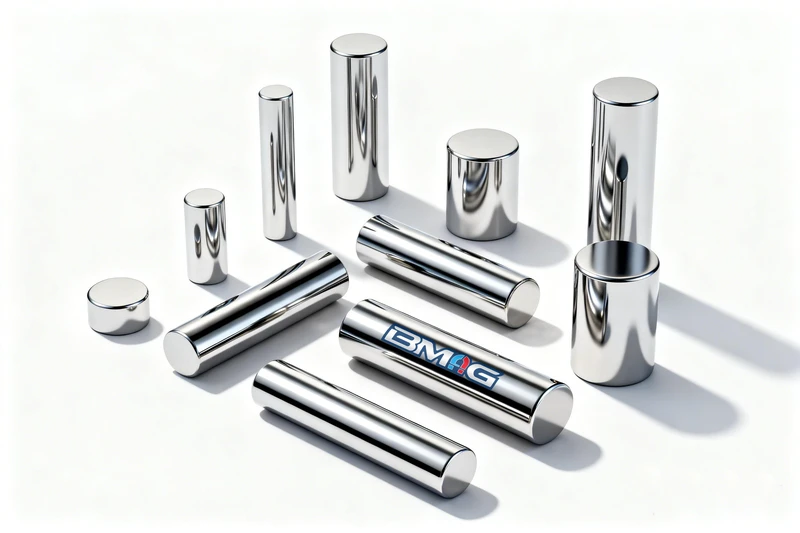
- Cylinders and Discs: Used in sensors and holding assemblies.
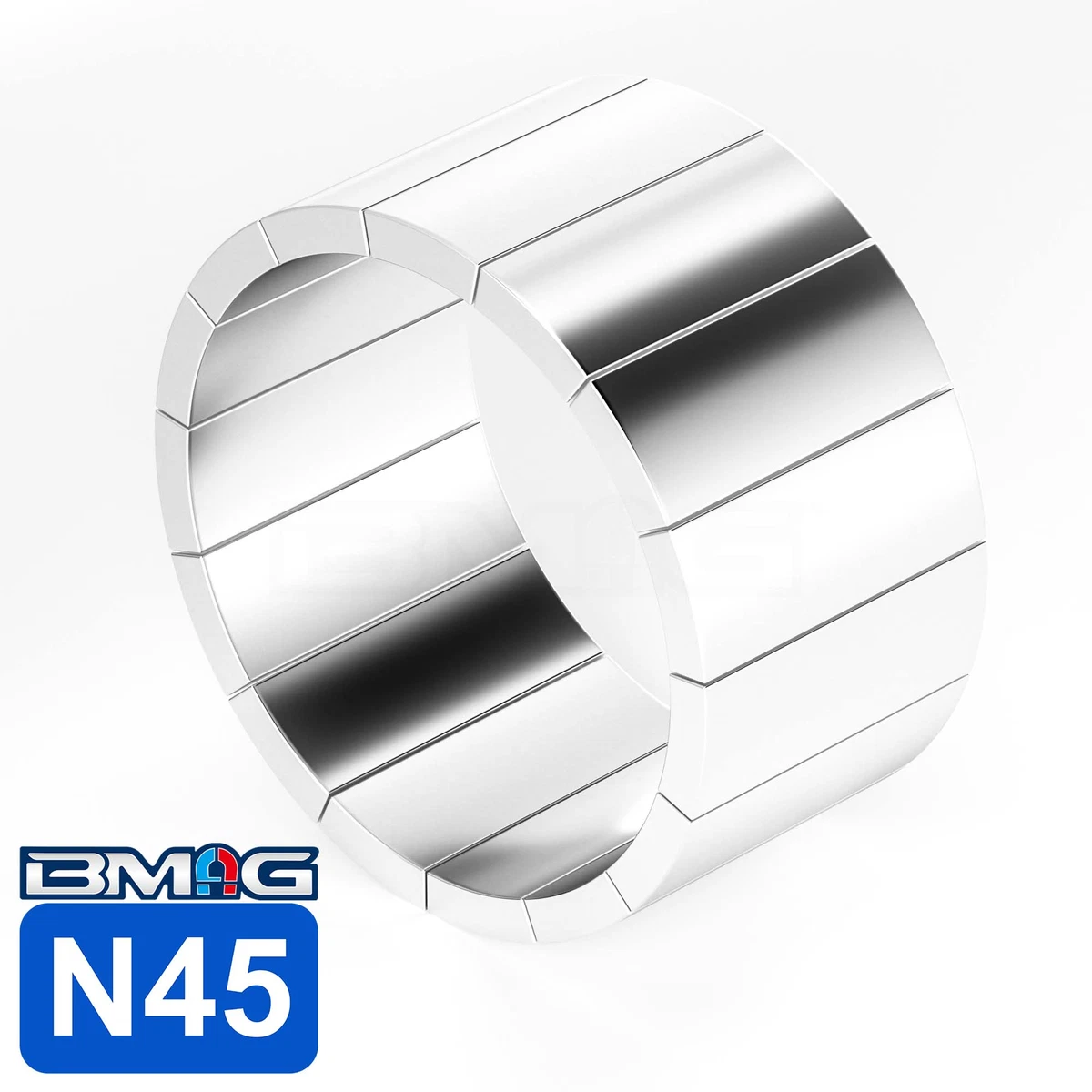
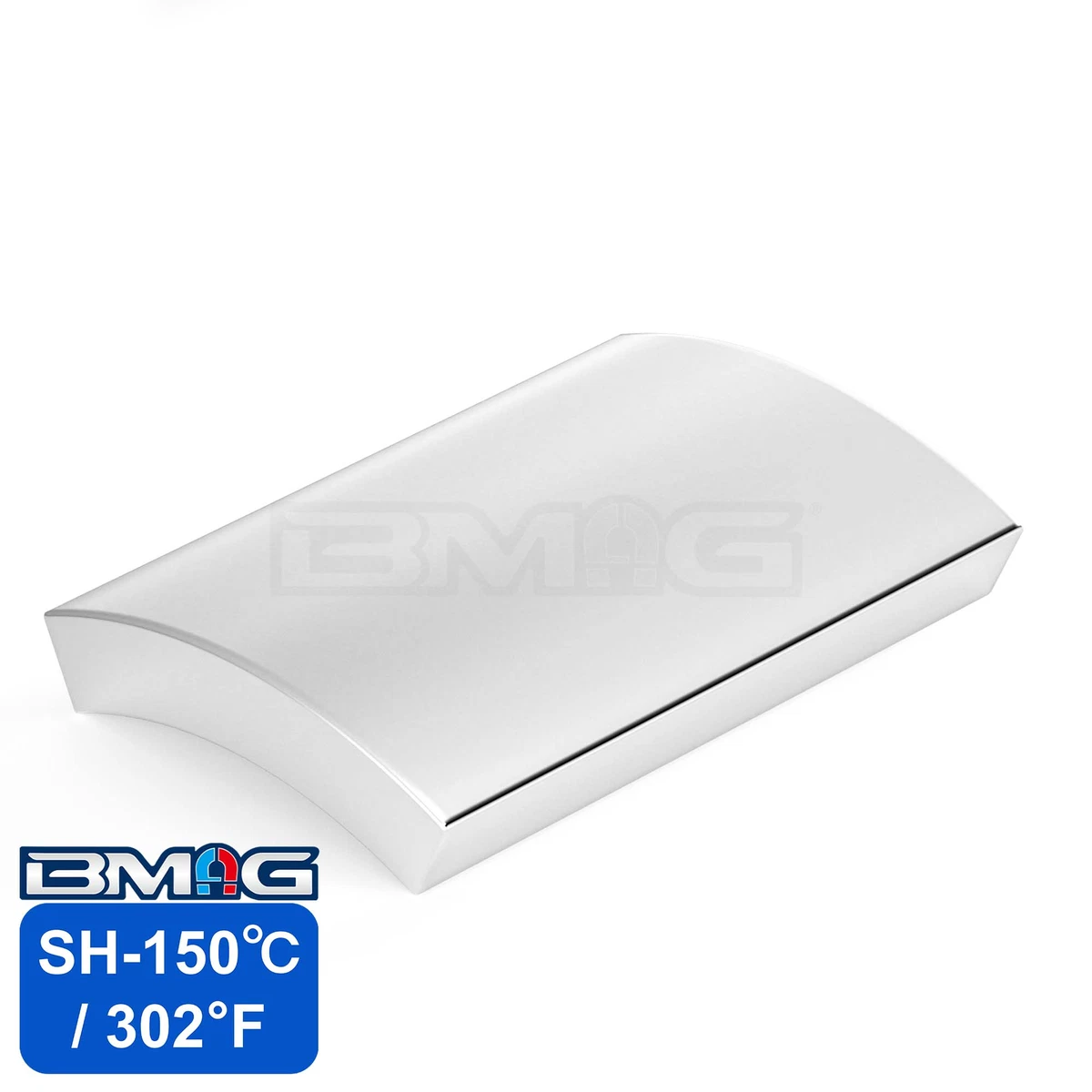
- Rings and Arcs: Specifically oriented for motor rotors and stators.
- Custom Geometric Compacts: Engineered to minimize material waste during final diamond grinding.

5. Post-Pressing Protection: Plastic Sealing and Wrapping
The moment the “green compact” leaves the press, it is in its most vulnerable state. It is effectively a “sandcastle” held together by molecular friction; it is brittle, fragile, and highly reactive.
Oxidation Prevention
Because the powder has an incredibly high surface area, exposure to oxygen and humidity can cause rapid oxidation. If the green body begins to oxidize, it will result in “voids” or “cracks” during the sintering phase, rendering the magnet useless.
The BMAG Protocol: Vacuum Sealing
Immediately after the pressing and orientation process, the green compacts undergo:
- Inspection: Quick measurement of weight and dimensions.
- Plastic Wrapping: The blocks are wrapped in specialized anti-oxidation plastic film.
- Vacuum Sealing: The wrapped NdFeB magnets are placed in vacuum bags and sealed to remove all air. This process protects the compacts from the atmosphere and provides mechanical support during transport to the Phase IV: Sintering stage.
6. Conclusion: The Foundation of Performance
Phase III is where the theoretical potential of the Neodymium alloy becomes a physical reality. By combining high-intensity 3.0T magnetic alignment with the uniform density of Cold Isostatic Pressing (CIP), BMAG ensures that the “magnetic soul” of the magnet is perfectly aligned.
The precision of our pressing process is why BMAG neodymium magnets consistently exhibit “Square” B-H curves and industry-leading remanence. By protecting these “green” bodies with rigorous vacuum sealing, we guarantee that the purity of our powder is preserved until it is permanently fused in the sintering furnace.
Looking for a strong NdFeB magnet with a specific orientation for a complex motor design? Contact the BMAG engineering team to discuss custom tooling and orientation patterns for your project.