









A neodymium countersunk magnet is a strong NdFeB magnet with a beveled screw hole that allows a flat-head screw to sit flush with the magnet surface. This design combines magnetic holding force with mechanical fastening, making it useful when adhesive alone is not reliable or when the magnet must be fixed precisely to wood, plastic, aluminum, steel, or an OEM assembly.
For buyers comparing aimants néodyme à tête fraisée, the key is not only pull force. Hole direction, magnet grade, coating, tolerance, screw type, working temperature, and installation method all affect performance and service life.
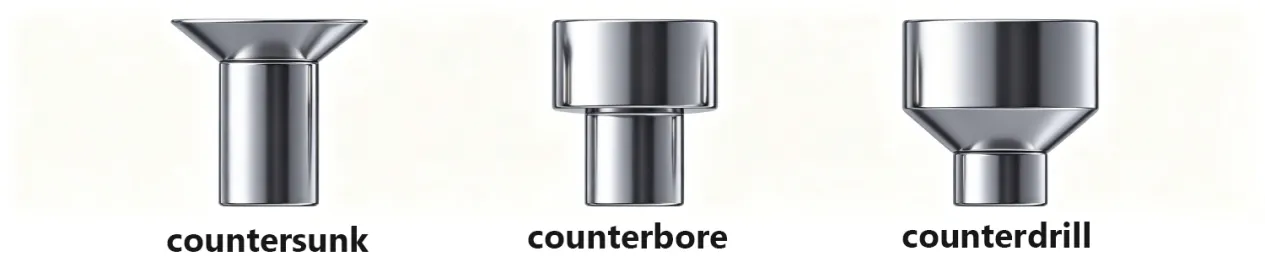
Countersunk vs. Counterbored : A Quick Tip
Countersunk and counterbored holes are often confused. A countersunk hole has a cone-shaped bevel designed for a flat-head screw, so the screw head sits flush or nearly flush. A counterbored hole has a straight cylindrical recess designed for a socket-head or cap screw. If the wrong hole type is chosen, the screw may not sit properly, the magnet may crack under stress, or the assembly may look uneven.
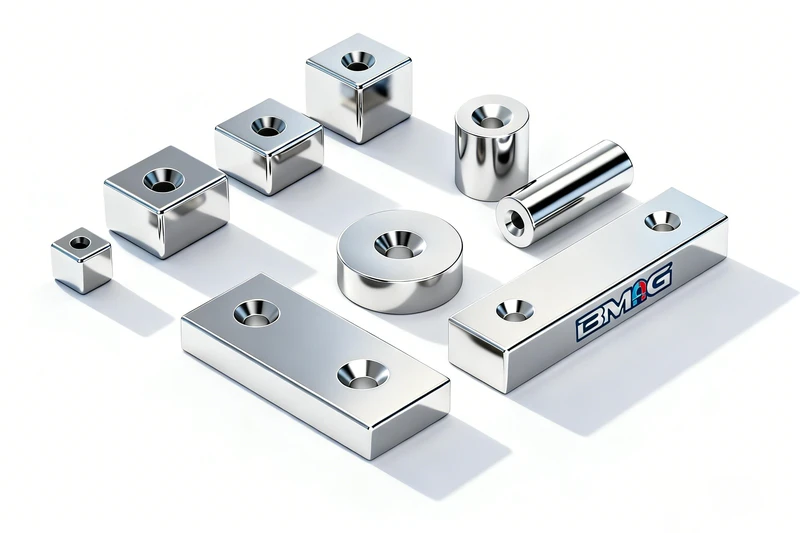
Appearance, Material, Shapes, and Sizes
Most countersunk rare earth magnets are made from sintered neodymium iron boron, often called NdFeB. The magnetic core is extremely strong but brittle and corrosion-sensitive, so it normally requires a protective coating. Common coatings include nickel-copper-nickel for dry indoor use, epoxy for wet or outdoor environments, zinc for economical protection, black nickel for a darker finish, and rubber or plastic coatings where surface protection is important.
The most common forms are round countersunk magnets, countersunk ring magnets, countersunk disc magnets, rectangular block magnets with one or two countersunk holes, and plate-style magnets. Sizes vary from small magnets for sensors and cabinet closures to larger magnets for fixtures, automation, signage, and industrial holding applications.
Hole Types and Magnetization Direction
A countersunk magnet may have one hole, two holes, or a custom hole layout. Round magnets usually have a centered countersunk hole, while block magnets may use one or two holes depending on the required anti-rotation stability. The countersink direction also matters: some magnets are countersunk on the north face, some on the south face, and some can be configured for special assemblies.
Magnetization is usually axial for disc and ring magnets, meaning the north and south poles are on the flat faces. For custom parts, the supplier should confirm pole direction, countersink side, polarity marking, and whether left/right or north/south versions are needed for paired assemblies.
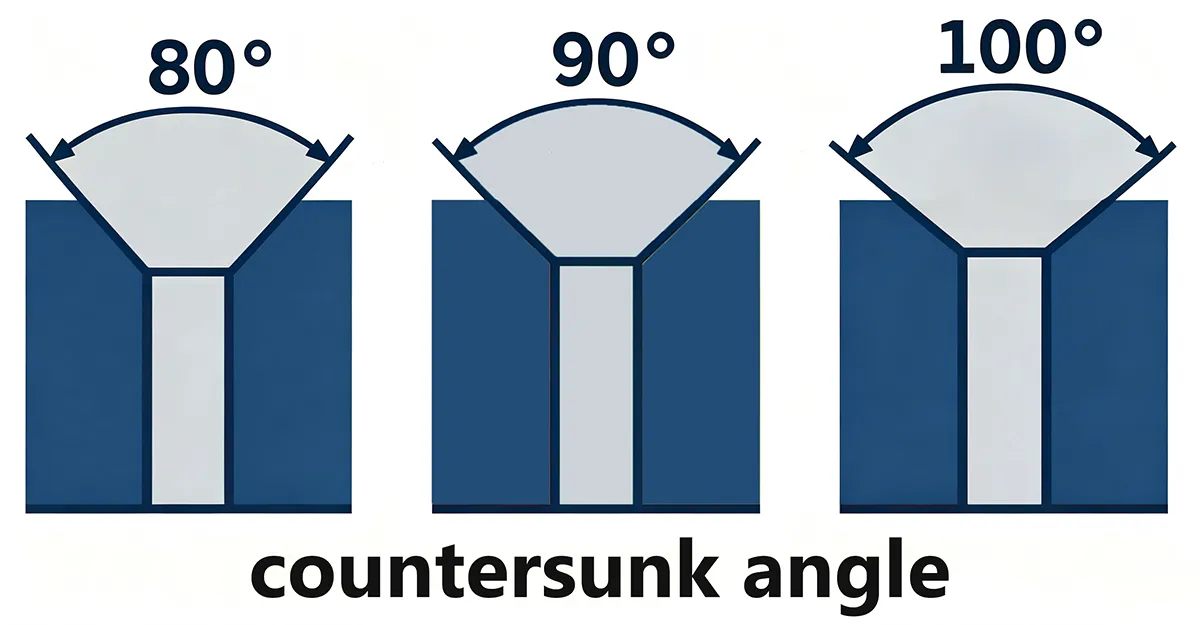
What is Countersink Angle
This countersink angle is also a critical parameter. It determines how precisely the magnet will mate with the countersunk screw head during installation, and directly impacts the stability and security of the final assembly.
Why Countersunk Magnet Design Is Difficult
Countersunk neodymium magnets look simple, but they are harder to design than standard discs or blocks. NdFeB is brittle, so drilling or shaping a hole requires controlled manufacturing rather than post-processing by the user. The thin material around the hole can chip if the geometry is too aggressive or if the screw applies uneven pressure.
The designer must balance holding force, magnet thickness, hole diameter, countersink angle, edge distance, coating thickness, and installation torque. A stronger grade is not always the best answer. In high-temperature environments, a lower-strength but higher-temperature grade may perform better than a high-strength standard N grade.
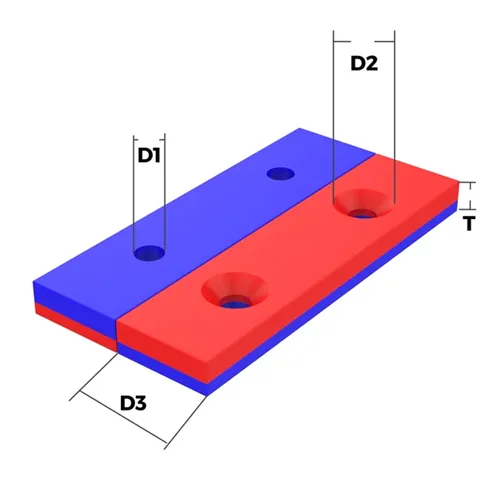
Key Parameters and Tolerances to Specify
When sourcing neodymium magnets with countersunk holes, provide a drawing or specification that includes outer diameter or length/width, thickness, through-hole diameter, countersink diameter, countersink angle, countersink side, magnet grade, coating, magnetization direction, polarity requirement, dimensional tolerance, pull force requirement, working temperature, and screw type.
BMAG also provides NdFeB magnet technical data that can help buyers compare grade, temperature resistance, and magnetic properties before finalizing a drawing.
| Parameter | Why It Matters |
| Grade | Controls strength, cost, and maximum operating temperature |
| Revêtement | Protects the NdFeB core from corrosion and wear |
| Countersink side | Determines screw direction and exposed pole face |
| Tolérance | Affects fit in fixtures, housings, and automated assemblies |
| Screw torque | Too much torque can crack the magnet or damage coating |
Applications Common
Countersunk neodymium magnets are used in cabinetry, door catches, display systems, signage, jigs, fixtures, sensor mounts, automation equipment, retail displays, removable panels, lighting housings, marine hardware, and custom OEM devices. They are especially valuable when a magnet needs repeatable location and a clean flush-mounted appearance.
When Is a Countersunk Magnet the Better Solution?
Compared with adhesive-backed magnets, countersunk magnets provide a more secure mechanical connection, especially in high-load, dusty, oily, humid, or temperature-changing environments. Compared with plain disc magnets, they are easier to mount accurately and replace if needed. Compared with pot magnets, they are usually thinner and more flexible for embedded designs, although pot magnets may offer better protected holding force on steel surfaces.
Purchasing Advice for OEM Buyers
Before purchasing, define the real application rather than only the magnet size. Ask where the magnet will be mounted, what screw will be used, what surface it will contact, whether it faces moisture or heat, and whether the magnet must be assembled by hand or by automation. Crucially, ensure assembly teams or automated lines are instructed never to strike or hammer the magnets during installation; violent impacts can crack the brittle material and destroy its magnetic alignment. For outdoor or wet applications, epoxy, rubber, plastic, or other enhanced coatings may be safer than standard nickel plating.
For custom projects, choose a supplier that can review drawings, confirm magnetic direction, recommend coating and grade, and provide quality documentation. BMAG positions itself as a manufacturing partner for countersunk neodymium magnets with configurable grades, coatings, tolerances, and OEM support.
Conclusion
Neodymium countersunk magnets are compact fastening magnets designed for flush screw mounting. They are ideal when magnetic force must be combined with mechanical security, precise positioning, and clean installation. The best choice depends on more than strength: hole geometry, temperature grade, coating, tolerance, polarity, and installation conditions all need to be specified before production.