








Neodymium cylinder magnets are a crucial basic component in various industrial and electronic devices. The small size, cylinder form, strong magnetism, and wide range of customizations make them suitable for modern magnetic assemblies. However, not all neodymium rod magnets can serve every purpose.
The precise performance depends on the right choice of magnets in terms of their technical specifications and functionality. In cases where the project requires special-shaped magnets, an ordinary single cylinder magnet won’t be useful for it. Custom-designed magnets would better suit the design objectives.
In this guide, we will walk through the basic structure of neodymium cylindrical magnets, their key features, uses, and how to choose them for the right application.
What Is A Neodymium Cylinder Magnet?
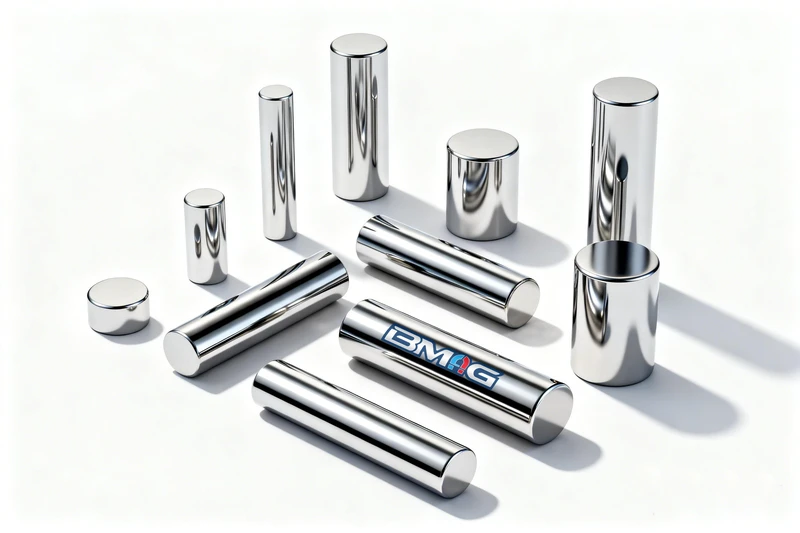
A neodymium cylinder magnet is also called a round cylinder magnet made from an alloy of neodymium (Nd), iron (Fe), and boron (B). Essentially, they are like a short rod or tiny coin, mostly used in energy-efficient PM-motors. They are processed through crushing, sintering, cutting into cylinders, and coating.
Inside the Nd₂Fe₁₄B magnet, billions of crystal grains are aligned facing the same direction to create a combined magnetic pull. This pulls in stronger-than-usual iron magnets, making it a strong permanent magnet.
Its two end surfaces serve as poles, its rounded surface serves as an edge, and it has a fine silvery film on it to protect it from corrosion.
Key Features Of Neodymium Cylinder Magnets
Before neodymium cylinder magnet selection, have a look at the key features of cylindrical rare earth magnets.
1. Forme
The cylindrical geometry is highly favored in precision engineering because it offers ultimate structural efficiency and seamless mechanical integration.
The circular profile perfectly complements standard pre-drilled or CNC-machined holes. This allows for cost-effective “press-fit” or adhesive-embedded installations, eliminating the need for complex square pocket milling and significantly reducing housing manufacturing costs. Furthermore, compared to block magnets that suffer from erratic corner flux leakage, a perfect right circular cylinder ensures a highly uniform and predictable magnetic field distribution, making it the ideal choice for rotational symmetry and precise concentric alignment.
2. Matériau
A typical magnet by material weightage is made of 65% iron, 30% neodymium, and 1-2% boron. These sintered grains are responsible for their exceptional magnetic properties:
- Fer (Fe) : It is the most magnetic metal and provides high saturation magnetization.
- Neodymium (Nd): A rare earth metal that keeps the magnetism locked into the magnetic structure of the magnet. Thus, responsible for increased coercivity (resistance to demagnetization).
- Boron (B) : It is magnetically inert but keeps the crystalline structure intact so that iron and neodymium work together.
3. Taille
The 3D cylinder geometry is defined by two parameters: the Diameter (D) and Length (L). When their diameter is more than their length, they are called disc magnets. And, when their length exceeds their diameter, they are called rod magnets.
4. Geometry
For its geometry, they have straight, flat, parallel sides and a perfect right circular cylinder. The center of both circular faces defines the magnetic axis, with one flat circular face toward the north pole and the opposite face toward the south pole. It defines magnetization direction because:
- When flat faces are used as poles, then axial magnetization
- When lateral curved sides are used as poles, then diametrical magnetization
5. Densité
The neodymium magnets are surprisingly heavy for their size because of the sintered crystal structure. The density usually ranges from 7.4 to 7.6 g/cm³ after production.
6. Options de revêtement
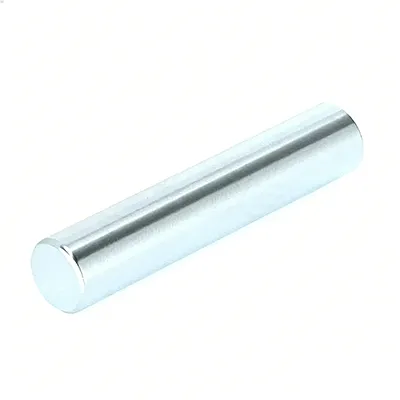
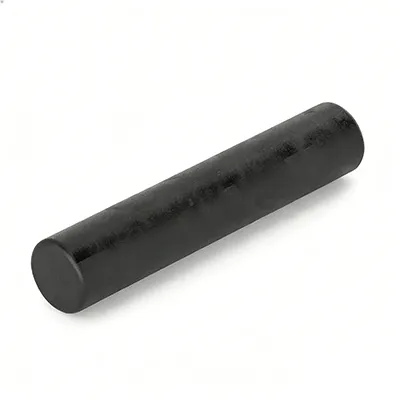
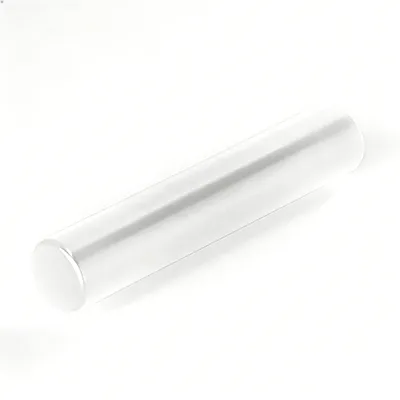
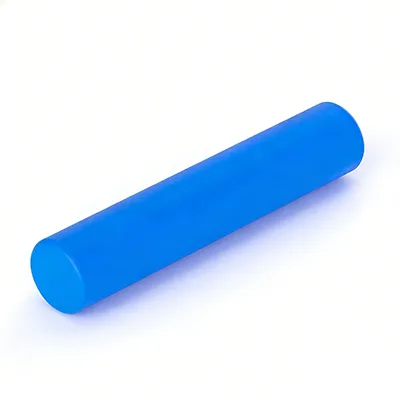
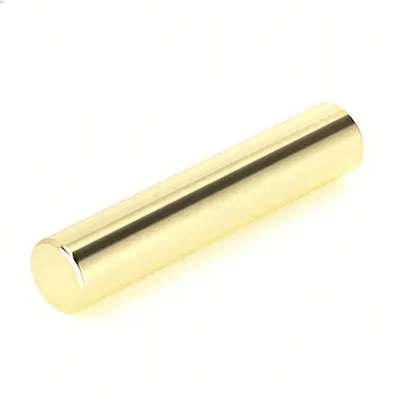
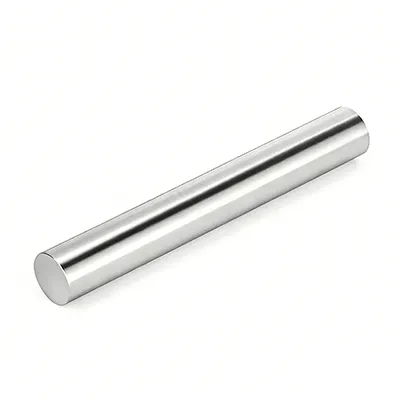
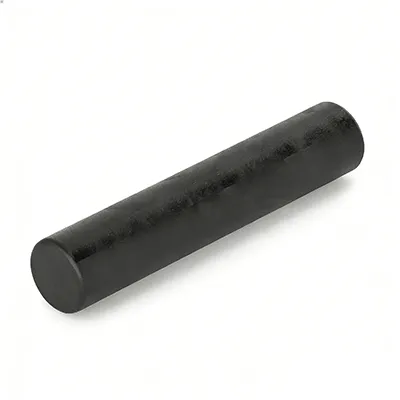
Coating is applied for protection against corrosion, as the surface is brittle and the magnet would fall apart within days. Therefore, neodymium cylinders are electroplated with a multi-layer coating of nickel-copper-nickel (Ni-Cu-Ni).
- An inner nickel layer to firmly stick to the magnet surface
- The middle copper layer keeps moisture out
- Outer nickel layer to resist scratches
The coating is only 10-20 micrometers thick. For harsh environments, epoxy zinc, tin, or gold coatings are sometimes used.
7. Working Temperature
Standard neodymium magnets perform well in everyday environments but start to lose magnetic strength above 80°C. Special grades can withstand temperatures up to 220°C, suitable for high-precision instruments.
What Are The Uses Of Strong Cylinder Magnets?
Being manufactured from rare earth metals, they have the highest magnetic properties with consistent output among all commercially available materials. Therefore, neodymium cylinder magnets are highly preferred by many consumers for long-term industrial and technical applications.
1. Rotary Sensors
This is one of the most common applications of diametrically magnetized cylinders. These components form part of the Hall-effect sensor, which detects the real-time rotation, motor speed, and signals for feedback from the motor.
2. Magnetic Encoders
They also depend on magnetic signals from neodymium cylinder magnets for their performance. Their shape and magnetization make possible the angular orientation and self-sensing of machinery.
3. Holding Fixtures
Large diametric magnetic cylinders are used for inner magnetic retention and magnetic switch locks during the mechanical assembly process. Due to their reliable magnetic retention, they are used in the temporary attachment of magnetic parts and the adsorption of machine doors where square magnets are not suitable.
4. Precise Alignment and Positioning
Many industrial machining processes require high-precision fixation aids. Cylinder magnets are fixed into machining fixtures and alignment tools to help the workers position their machined components.
5. Brushless Motors And Actuators
Drive devices benefit greatly from custom-made neodymium cylinder magnets, which can be fitted into miniature DC motors, servo motors, micro-drive motors, and linear actuators.
6. Speakers and Electronic Assemblies
Cylinder magnets are also used in phone speakers, highly sensitive microphones, and mini electronic products to assist in vibration transmission.
7. Medical and Laboratory Equipment
Magnetic stability and safety are the key demands in this sector, and neodymium cylindrical magnets meet this demand. They are used in portable medical equipment, lab testing machines, and diagnostic tools with an adjustable magnetic field.
Factors to Consider When Buying Cylindrical Neodymium Magnets
When choosing proper magnets, taking the following steps is crucial for their efficient working.
Step 1: Define the Required Pull Force
Consumers must calculate the distance from the magnet and the attracted piece of metal to ensure they have chosen the right grade and size of magnets. High-grade magnets (N35-N55) have the strongest remanence.
Step 2: Consider Space Constraints
The ratio Diameter: Length defines the magnetic performance and installation capabilities. Large diametric cylinders have a stronger pull and stick firmly, whereas longer cylinders have a weak grip but a strong field projection.
- Diameter > Length: Wide and flat magnet with force spreading out, best for surface-to-surface holding applications like assemblies, latches, and holding fixtures.
- Length > diameter: Tall and narrow magnet with long reach, best for sensors or motors where it can sense objects from far.
Step 3: Evaluate Working Conditions
The standard N-type NdFeB cylinder magnets work best in normal working conditions. Humid conditions, higher temperatures, and exposure to chemicals demand specific material compatibility. For example, special grades can withstand irreversible demagnetization when used continuously under high temperatures above 80°C.
Step 4: Determine Magnetization Direction Needed
Magnetization direction can be customized to two different orientations depending on how it is positioned during the final process. Axial magnetization runs from the top to the bottom of the circular face along the longitudinal axis. It makes it easier to drill holes and use adsorption applications. Whereas, diametric magnetization runs on its sides and is more useful for rotational applications.
Step 5: Decide On Volume
Prototypes cost significantly more than bulk units and are limited to size, grade, or coating. While bulk orders may take longer to deliver, they can be custom-made at a lower cost. They are best suited for mass industrial and consumer applications.
Technical Specs of BMAG Round Cylinder Magnets
Neodymium cylinder magnets from BMAG Magnets feature the manufacturing and supplying of such high-tech and high-performing magnets, which are widely employed in various industrial areas. Their technical specifications are:
- Magnetization direction: Axial, Diametric, Multipole Axial, Multipole Radial
- Remanence / Magnetic Grade: N35 to N55 (Standard N grades), including premium high-coercivity options (M, H, SH, UH, EH, AH series).
- Heat Grades: Standard N for 80°C, but for high-temperature applications, grade M (100°C), H (120°C) , SH (150°C), SH-T (160°C), UH (180°C), UH-T (190°C), EH (200°C), AH (220°C).
- Revêtement: Customizable (standard nickel-plated)
Pourquoi choisir BMAG?
- Consistent performance
- OEM services
- ISO 9001 and RoHS certified manufacturing
- Documentation support
- Over 20 years of experience
Conclusion
The article above highlights the common uses of neodymium cylinder magnets that will assist engineers and buyers in choosing appropriate size, magnetization, coating, and performance levels for their projects.
Au BMAG, we are ready to offer you a neodymium cylinder magnet in case you want customized sizes, coatings, magnetization, or a highly precise industrial grade.