








Alles über Bogenmagnete
Was sind Bogenmagnete?
Bogenmagnete (auch gebogene Magnete/Segmentmagnete genannt) – Dauermagnete mit gebogener/bogenförmiger Form, die für runde/zylindrische Baugruppen ausgelegt sind.
Schlüsselparameter von Bogenmagneten
- Magnetische Leistungsparameter: Remanenz (Br), Koerzitivfeldstärke (Hc), maximales Energieprodukt (BHmax)
- Dimensionale Parameter: Krümmungsradius, Bogenlänge, Dicke, Innen-/Außendurchmesser, Toleranzbereich
- Umweltparameter: Betriebstemperaturbereich, Korrosionsbeständigkeit, Verschleißfestigkeit
- Beschichtungsparameter: Gängige Beschichtungen (Ni-Cu-Ni, Zn, Epoxid), Schichtdicke, Haftfestigkeit
Warum gebogene Magnete unerlässlich sind?
Funktionale Notwendigkeit bei Drehvorrichtungen
- Lücken zwischen Magneten und gekrümmten Baugruppen vermeiden, magnetischen Flussleckagen und Energieverschwendung verhindern
- Gleichmäßige Drehmomentabgabe in Motoren/Generatoren gewährleisten, wodurch mechanischer Verschleiß reduziert und die Lebensdauer von Geräten verlängert wird
- Ermöglicht die Miniaturisierung von Geräten (z.B. kleine EV-Motoren) durch Anpassung an kompakte gekrümmte Räume
Notwendigkeit in Hochleistungs- und Hochpräzisionsanwendungen
- Automobil (Elektrofahrzeuge): Mehr Motorleistung, weniger Energieverbrauch und erhöhte Reichweite
- Medizin (MRI): Gewährleistung einer gleichmäßigen Magnetfeldverteilung für präzise Diagnoseergebnisse
- Erneuerbare Energien (Windkraftanlagen): Steigerung der Stromerzeugungseffizienz in rauen Umgebungen im Freien
Wirtschaftliche und praktische Notwendigkeit
- Gesamtanlageneffektivität durch Optimierung der magnetischen Leistung steigern (keine zusätzlichen Magnetkomponenten erforderlich)
- Montageprozesse vereinfachen (nahtlose Passform, kein komplexer Abgleich erforderlich)
- Verbessern Sie die Produktzuverlässigkeit, um die Kosten für den Kundendienst für Hersteller zu senken
Industrieentwicklungsgetriebene Notwendigkeit
- Wachstum der Elektrofahrzeug-, erneuerbare Energie- und Smart-Elektronik-Industrie erhöht die Nachfrage nach Hochleistungs-Permanentmagneten
- Technische Upgrades (z. B. Motoren mit höherer Präzision) erfordern Bogenmagnete, um strengere Leistungsstandards zu erfüllen
Kerntechnologien, die in Lichtbogentriebwerken verwendet werden
Pulvermetallurgischer Prozess
- PulverpräparationRohmaterialien geschmolzen und zu feinem Magnetpulver zermahlen
- Kompaktierung unter MagnetfeldBogenförmiges Drücken unter Ausrichtung der magnetischen Domänen
- SinternHochtemperatur-Vakuumsintern zur Erzielung hoher mechanischer Festigkeit
Präzisionsbearbeitung
- Schleifen, Schneiden und Bohren zur Erzielung enger Maßtoleranzen
- Sorgt für richtigen Sitz bei Rotoren, Statoren und Magnetbaugruppen
Oberflächenbehandlung und Beschichtung
- Wird zur Korrosionsverhinderung eingesetzt (insbesondere NdFeB)
- Gängige Beschichtungen: Ni-Cu-Ni, Epoxidbeschichtung, Verzinkung, elektrophoretische Beschichtung
Magnetisierungstechnik
- Radialmagnetisierung Am gebräuchlichsten für Motoren, bildet ein umlaufendes Magnetfeld
- Axiale Magnetisierung Das Magnetfeld des Bogens ist parallel zur Mittelachse des Rotors oder Zylinders ausgerichtet, in dem es verwendet wird.
- Halbach-Array-Magnetisierung Verbessert die Magnetfeldkonzentration und -effizienz
Die Unterschiede zwischen Bogenmagneten und anderen Magneten
| Vergleichspunkte | Lichtbogenmagnete | Rechteckige/Blockmagnete | Kachelmagnete | Ringmagnete |
| Form | Vollständig gekrümmter Segmentbogen | Flach, blockförmig | Flach mit leichter Krümmung (Halbbogen) | Integral voller Kreis |
| Form & Installation | Passende gekrümmte Baugruppen; präzises Passen erforderlich | Flach, geeignet für lineare Anwendungen | Einfacher zu installieren, aber mit Lücken | Integrale kreisförmige Struktur |
| Magnetischer Fluss"}, | Gleichmäßiger Fluss in kreisförmigen Geräten | Ungleichmäßiger Fluss in gekrümmten Installationen (Energieverlust) | Schlechte Gleichmäßigkeit; für geringe Präzision verwenden | Relativ einheitlich, aber unflexibel |
| Verarbeitung & Kosten | Hoher Verarbeitungsaufwand, höhere Kosten | Einfach herzustellen, geringere Kosten | Moderate Verarbeitung und Kosten | Mittelschwer bis schwierig |
| Anpassung | Anpassbare Größe und Krümmung | Standardgrößen meistens | Begrenzte Anpassung | Begrenzt durch die Gesamtgröße |
| Wartung | Einzelersatz verfügbar | Leicht zu ersetzen | Leicht zu ersetzen | Vollständiger Ersatz bei Beschädigung |
| Typische Anwendungen | Rotations- / Kreisvorrichtungen | Linearmotoren, Magnetspannfutter | Motoren geringer Präzision | Kleine integrierte kreisförmige Geräte |
| Körperkernkraft | Am besten für Kreisel-/Rotationsgeräte; geringer magnetischer Verlust; hohe Effizienz und Stabilität | Gut für geradlinige Bewegungen, kostengünstig | Niedrige Kosten, einfache Installation | Kompakte integrierte Struktur |
Kernmaterialklassen und Hauptanwendungen von Bogenmagneten
| Magnettyp | Hauptmerkmale | Anwendungsfälle |
| NdFeB-Bogenmagnete | Hohe magnetische Stärke Hohes Kosten-Nutzen-Verhältnis | EVsMotorenElektronik |
| SmCo-Bogenmagnete | Hohe Temperaturbeständigkeit Korrosionsbeständigkeit | Luft- und Raumfahrt Hochtemperaturausrüstung |
| Ferrite Arc Magnets | Low costLow magnetic strength | Household appliancesLow-power motors |
| AlNiCo Arc Magnets | Stable magnetic performance High temperature resistance | Medical equipmentInstrumentation |
Arc Magnets Market Current Situation and Forecast
Core Definition
The mainstream type is arc NdFeB-Magnete, which are mainly used in motors, automobiles, electroacoustics and other fields. Their core advantages are low cost and no rare earth dependence, and they are currently driven by new energy and high-efficiency motors for growth.
Current Market Situation
- Market Size: The global market was approximately 8.9 billion US dollars in 2024; it is expected to reach 9.8-11.5 billion US dollars in 2025, with a year-on-year growth of 6%-8%.
- Regional Pattern: China accounts for 35%-40% of the global market (the largest producer and consumer), and the United States is the second largest single market (about 2.4 billion US dollars in 2024).
- Product Structure: Sintered magnet accounts for 65%-70% (mainstream), and bonded magnet accounts for 25%-30%.
- Downstream Demand: Automobiles (including new energy vehicles) account for 35%-40% (the largest downstream), industrial motors 20%-25%, electroacoustics 15%-20%, and consumer electronics 10%-15%.
- Competitive Pattern: Chinese manufacturers dominate production capacity, and monopolize the high-end market; market occupancy is about 80%-90%.
- Core Drivers/Challenges: Drivers (new energy vehicles, energy efficiency policies, industrial automation); Challenges (raw material fluctuations, high-end substitution, environmental regulation).
Market Forecast
- Size and Growth Rate: 11.7-14.0 billion US dollars in 2030 (CAGR 4.6%-6.0%); 18.0-18.5 billion US dollars in 2035 (CAGR 6.0%-6.5%).
- Regional Trends: Asia-Pacific accounts for more than 38% (China’s CAGR 7.0%-7.5%), North America has the fastest growth rate (7.5%-8.0%), and Southeast Asia undertakes mid-to-low-end production capacity transfer.
- Product and Technology: High performance, bonded type and lightweight will become the mainstream, and the process will upgrade towards automation and environmental protection.
- Demand Structure: By 2030, the proportion of automobiles will rise to 45%-50%, and industrial motors/robots will account for 25%-30%, becoming the core growth driver.
- Competitive Trends: Chinese manufacturers will expand globally, while enterprises from the United States, Europe, and Australia are increasing R&D investment but have yet to achieve large-scale production; China remains the world’s largest manufacturing country.
Key Conclusions
Steady Track: CAGR of 6%-6.5% from 2026 to 2035, higher than that of traditional manufacturing industry.
Structural Opportunities: Sintered NdFeB magnet, new energy vehicles and industrial servo fields have leading growth rates.
Core Barrier: Cost advantage of no rare earth dependence and stable price.
Key Direction: Technological upgrading towards high performance and environmental protection, and layout in China, North America and Southeast Asia markets.
Top 6 Arc Magnet Manufacturers
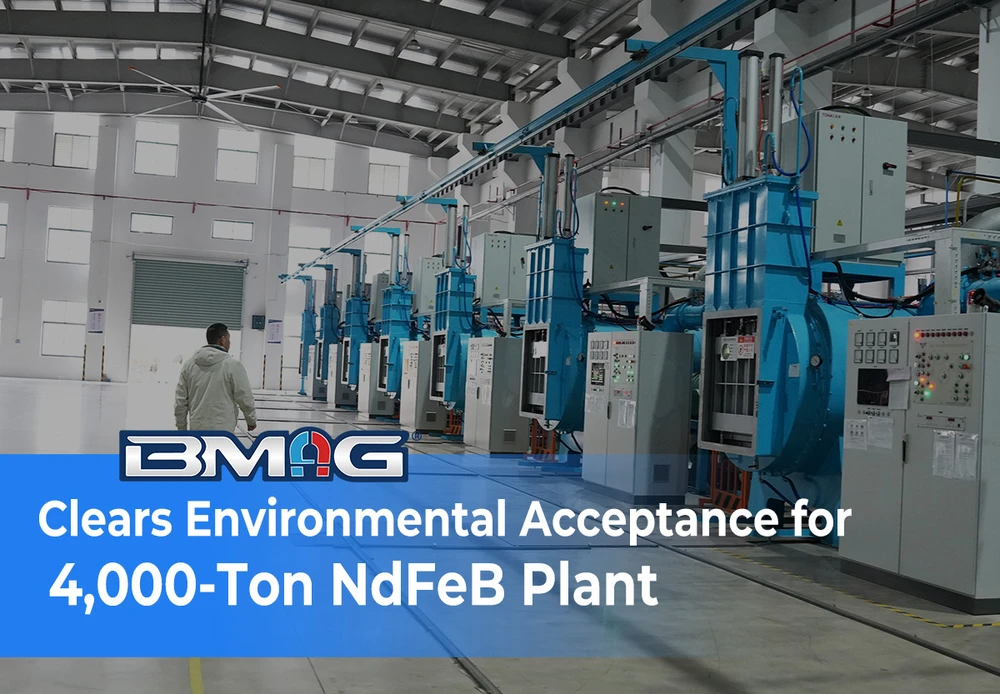
Ningbo BMAG New Materials Co., Ltd (https://bmagmagnet.com/)
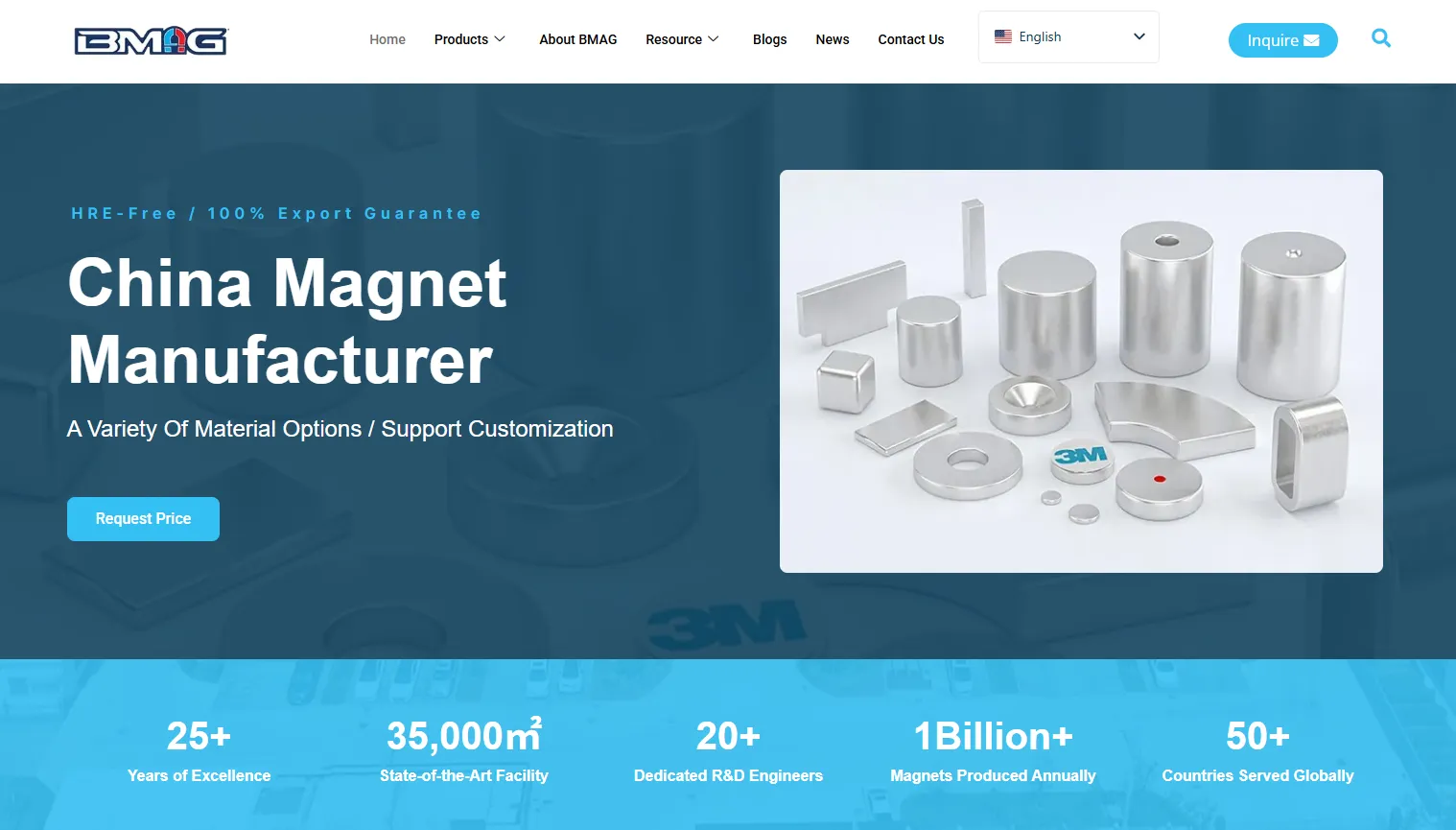
- Basic Info: Founded in 2000; Headquarters in Ningbo, China; Production base located in Ningbo
- Core Products: Neodymium Arc Magnet (core arc magnet product), sintered NdFeB magnets, bonded NdFeB magnets, ferrite magnets, magnetic assemblies; HRE-Free NdFeB arc magnets (self-developed high-end series)
- Application Fields: New energy vehicles (motor components), industrial motors, automotive electronics, consumer electronics, general manufacturing (custom magnetic component scenarios)
- Core Advantages: 100% export guarantee; HRE-Free NdFeB arc magnets without Dy/Tb export restrictions; one-stop precision customization; factory-direct pricing with no third-party markups; stringent in-house quality testing with professional equipment; complete in-house production chain
- Qualification Certification: Compliance with international magnet industry quality standards
- Key Customers/Case Studies: Global export-oriented customers, long-term partnerships with manufacturing enterprises for custom magnetic solutions (automotive and industrial motor fields)
AEMagnets (https://www.aemagnets.com)
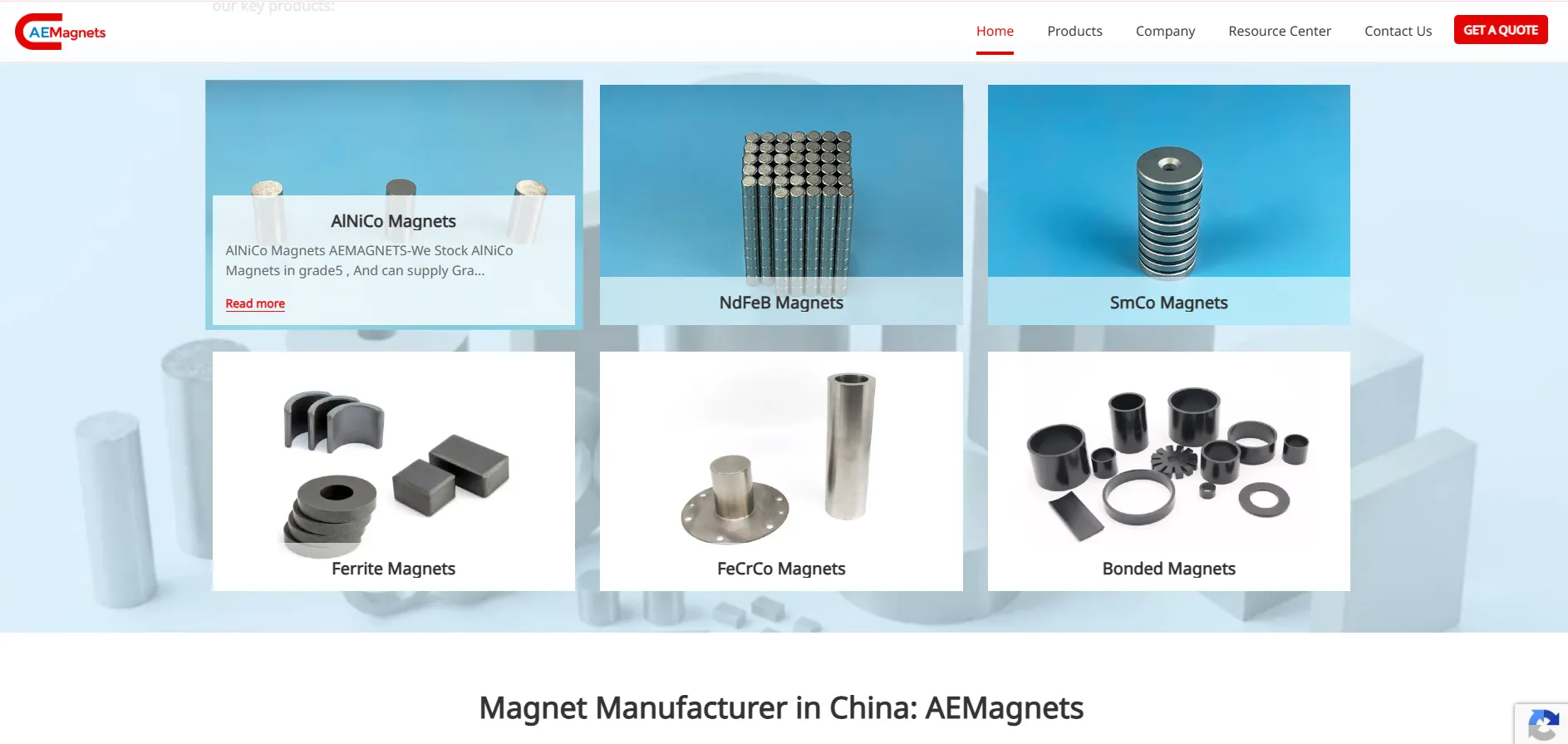
- Basic Info: Hunan-based China magnet manufacturer, 20+ years of R&D & production experience; 3000+ tons annual output, products sold to 80+ countries, covering 25+ industries.
- Core Products: Permanent magnets (NdFeB, SmCo, AlNiCo, Ferrite, FeCrCo, Bonded); custom arc magnets & multi-shape magnets (horseshoe, disc, ring, etc.).
- Application Fields: 25+ diverse industries, general magnet solutions for all sectors.
- Core Advantages: Full-process quality traceability; 5-7 days delivery for standard products; EIE (Early Involvement of Engineering) custom service; high production capacity + global delivery.
- Qualification Certification: ISO 9001 certified; 8D methodology for quality problem solving.
- Key Customers/Case Studies: Rich complex industry application cases accumulated.
MainRich Magnets (https://mainrichmagnets.com/)
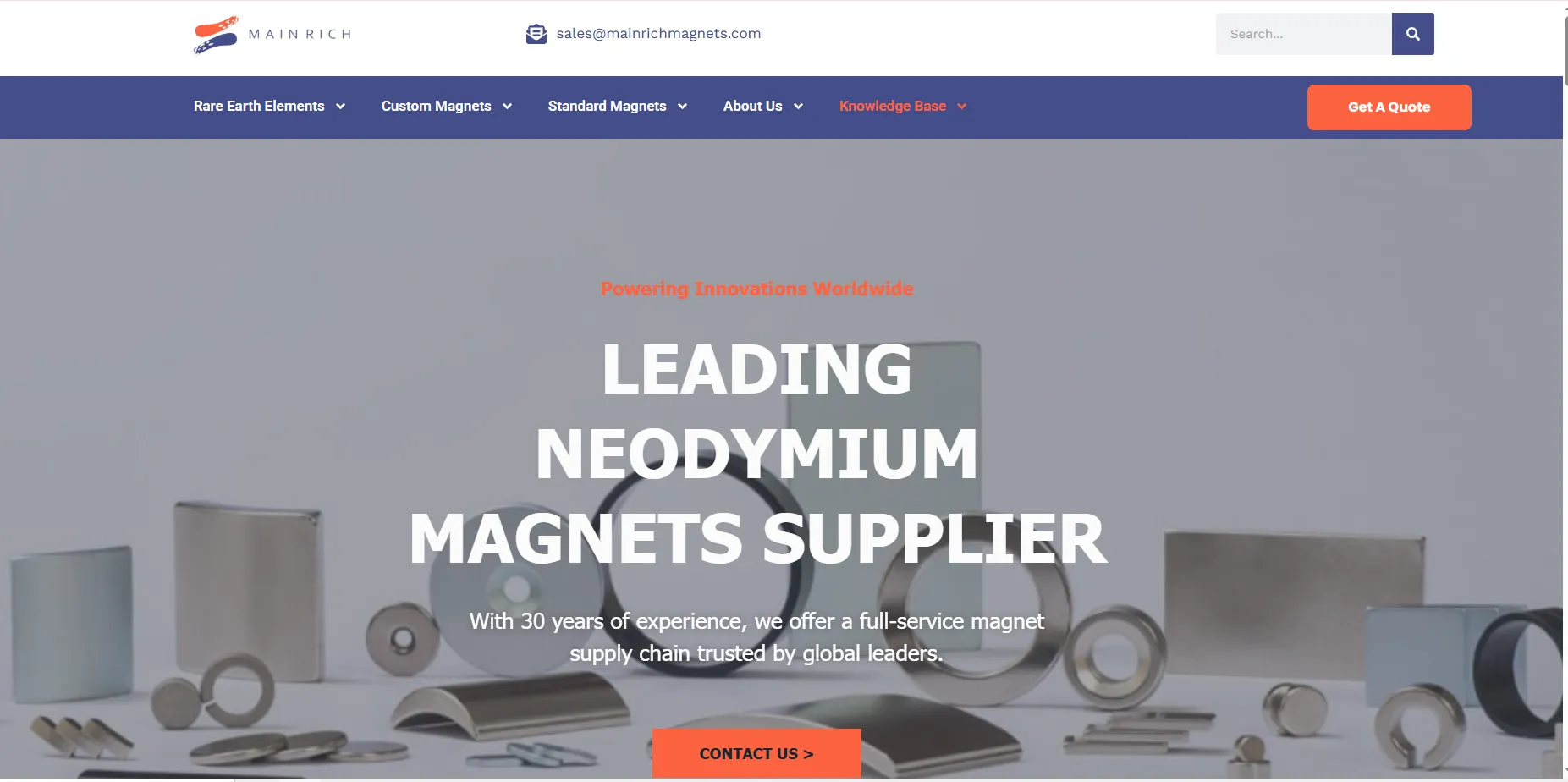
- Basic Info: 30+ years rare earth magnet supplier, one-stop supply chain service; China-based with global layout, custom magnet specialist.
- Core Products: NdFeB arc magnets (core), Ferrite, SmCo; injection-moulded magnet rotors/rings; N35-N33AH full grades available.
- Application Fields: Automotive, consumer electronics, aerospace, AI, medical devices, industrial automation.
- Core Advantages: Grain boundary diffusion tech cuts 15% cost for high-temp magnets; full customization (size/grade/coating/magnetization); 99% mass production consistency; integrated full supply chain.
- Qualification Certification: ISO 9001:2015 certified.
- Key Customers/Case Studies: JOHNSON ELECTRIC, HITACHI, Leap Frog; helps customers improve production efficiency and innovation capacity significantly.
Edgetech Industries (https://www.edge-techind.com/)
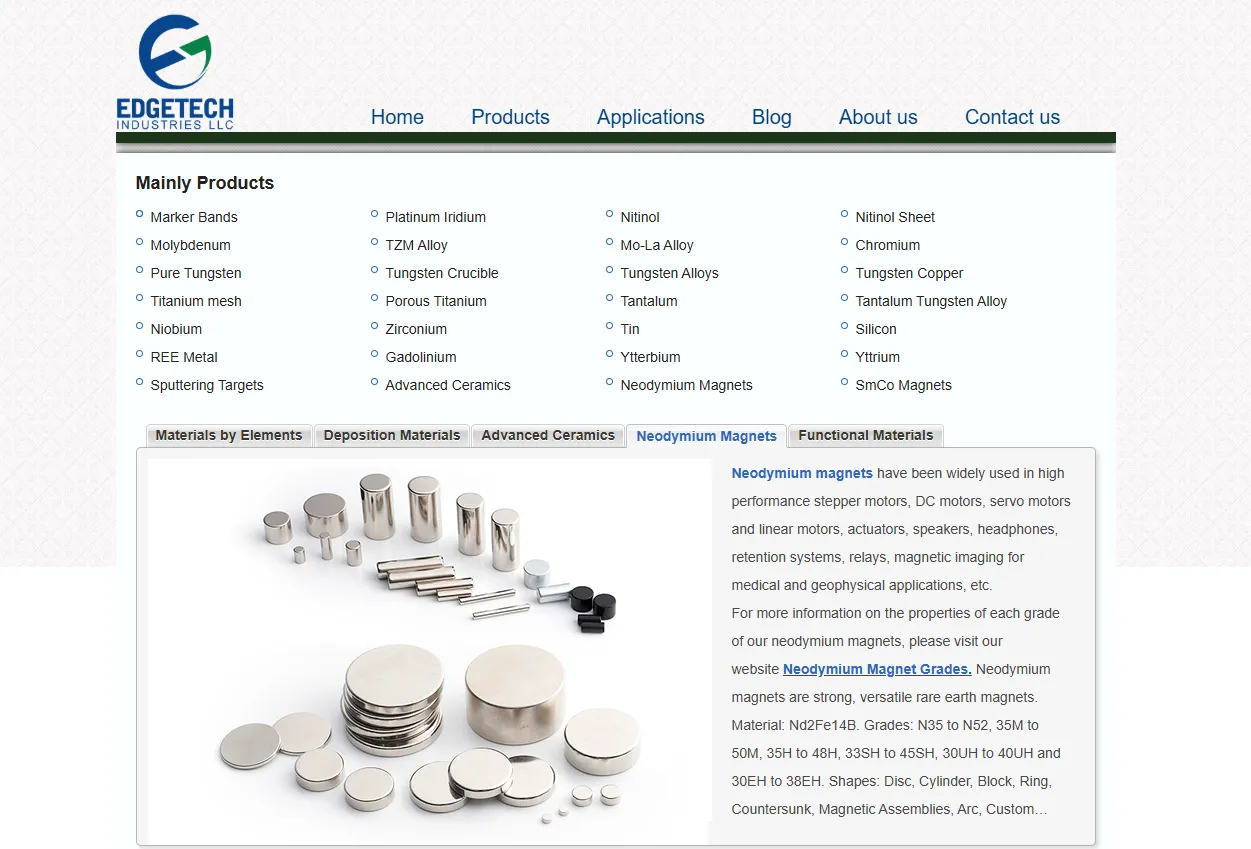
- Basic Info:Focusing on non-ferrous metals, rare earths, magnets, ceramics & deposition materials.
- Core Products: Neodymium & SmCo magnets (arc included); non-ferrous metals (W, Mo, Ta, Ti, Nb); advanced ceramics; sputtering targets; nitinol & medical capillaries; thermal spray materials.
- Application Fields: Motors, electronics, medical, aerospace, semiconductors, thin-film coating, automotive, industrial automation.
- Core Advantages: Wide material portfolio; high customization & precision; strict quality control; global industrial supply capability; medical & high‑temp material expertise.
- Qualification Certification: Rigorous quality system; ISO 9001 compliant; RoHS & REACH applicable for industrial materials.
- Key Customers: High‑tech enterprises, research institutes, medical device & semiconductor manufacturers worldwide.
SuperMagnetMan (https://supermagnetman.com/)
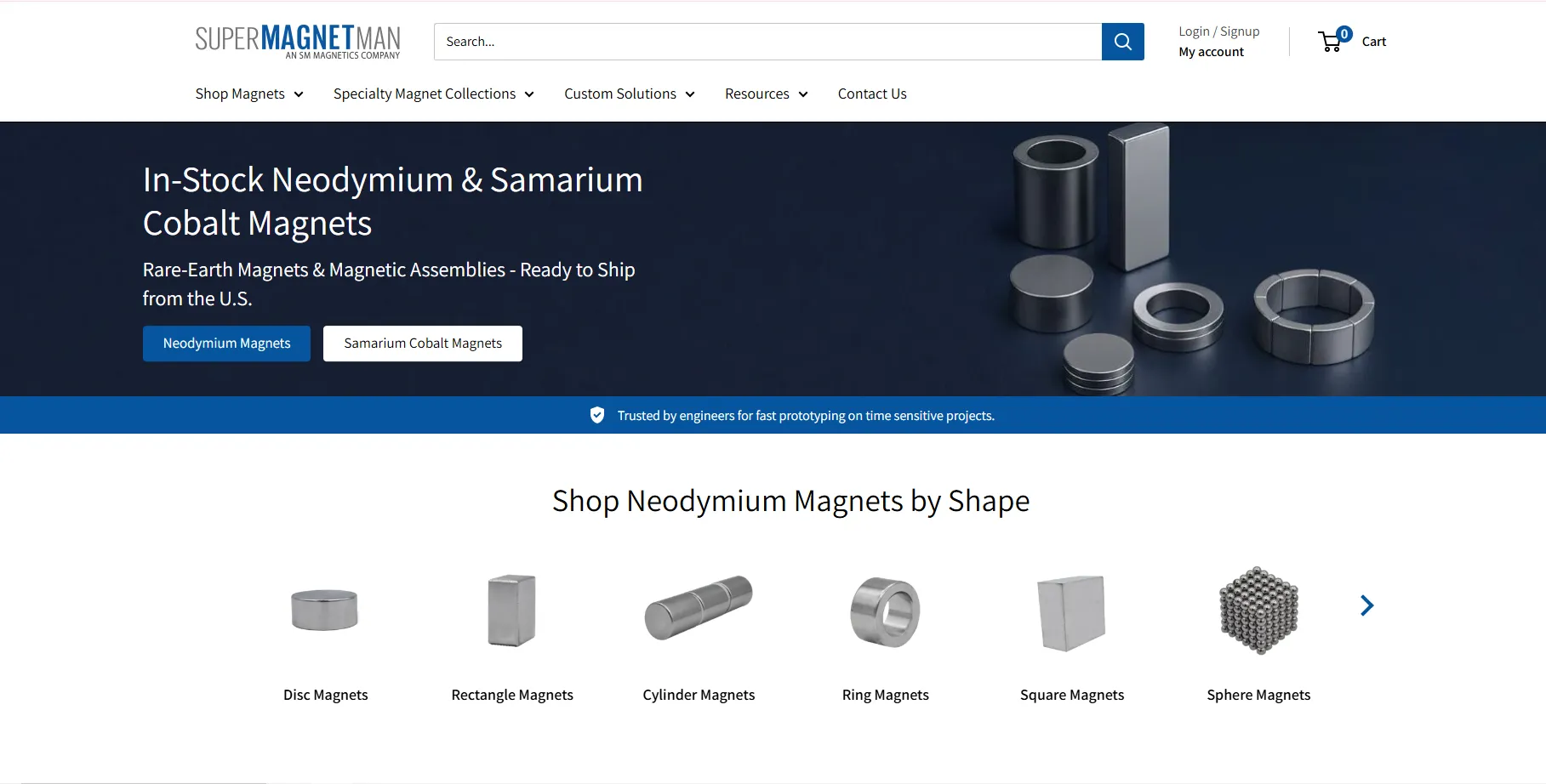
- Basic Info: US-based in-stock magnet supplier, e-commerce brand of SM Magnetics; specialized in fast prototyping for time-sensitive projects.
- Core Products: In-stock NdFeB arc magnets, SmCo magnets, Halbach arrays; special-shaped magnets (cone/pyramid/triangle); full-shape in-stock magnets.
- Application Fields: Motors/generators, medical devices, robotics/sensors, automotive, consumer electronics, R&D/prototyping.
- Core Advantages: US in-stock, immediate delivery; high-coercivity high-temp magnets; full-shape inventory; professional technical support for industrial applications.
- Qualification Certification: No certifications disclosed.
- Key Customers/Case Studies: Mainly engineers/project teams; positive feedback on fast delivery and high magnet precision.
MainrichMagnets (https://mainrichmagnets.com/)
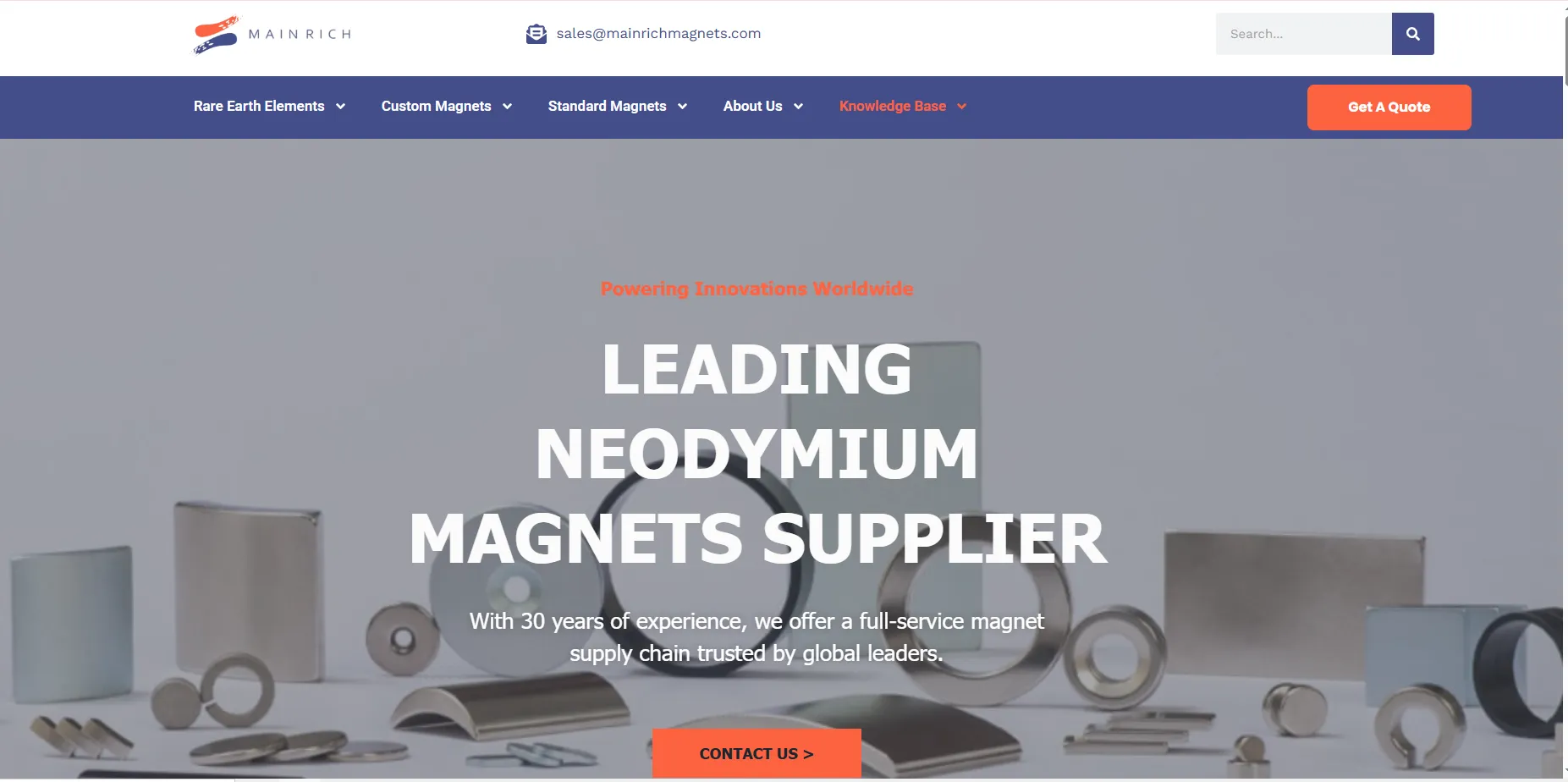
- Basic Info: Professional B2B neodym magnet manufacturer with 30+ years of experience; full supply chain from raw materials to finished components, serving global industrial clients.
- Core Products: NdFeB (arc magnets included), ferrite, SmCo magnets; custom magnetic rotors/assemblies; rare earth materials & industrial motor magnets.
- Application Fields: Automotive, consumer electronics, aerospace, AI, medical devices, industrial automation, new energy.
- Core Advantages: Full customization (size/grade/coating/magnetization); high consistency mass production; fast quote; global delivery; technical support.
- Qualification Certification: ISO 9001:2015 certified; RoHS & REACH compliant.
- Key Customers/Case Studies: Global industrial leaders; long-term partners with 99% mass production consistency.
How to Choose a Suitable Arc Magnet Manufacturers?
Key Criteria to Evaluate Arc Magnet Manufacturers
Manufacturing Capability
- Production scale and equipment
- Ability to produce customized arc magnets
- Production capacity
Quality Control System
- Certifications (ISO, IATF16949, RoHS, REACH, etc.)
- Quality testing equipment and processes
- Defect rate control and quality guarantee system
Technical Strength
- R&D team and technical support
- Mastery of core technologies
- Experience in key application fields
Supply Chain & Delivery
- Stable supply of raw materials
- Delivery time guarantee
- Logistics and packaging capabilities
Pricing & Cost Transparency
- Transparent quotation mechanism
- Cost competitiveness
- No hidden costs
After-Sales Service
- Technical support after delivery
- Warranty policy and quality problem handling mechanism
- Communication efficiency and response speed
How to Choose the Right Arc Magnet Manufacturer for You?
Clarify Your Core Needs
Confirm application field, product specs, order volume, budget and delivery time.
Match Arc Magnet Manufacturers Strengths to Your Needs
- High-precision demand (medical/aerospace): Opt for manufacturers with advanced testing equipment and high-precision project experience
- Mass production demand (EV/household appliances): Select those with large capacity and stable supply chain
- Customization demand: Choose manufacturers with strong R&D and flexible production lines
- Budget-sensitive: Pick cost-effective suppliers (e.g., Chinese manufacturers) with guaranteed core quality
Key Reminder
The best manufacturer is the most matching one, not the largest:
- Large manufacturers may have high MOQ and price, unsuitable for small-batch orders
- Small/medium manufacturers offer better customization flexibility and after-sales for small-batch orders
- Prioritize manufacturers with experience in your field (e.g., IATF16949 certification for automotive-related needs)
Step-by-Step Process to Find & Filter Arc Magnet Manufacturers
Step 1: Collect Potential Manufacturers
- Channels: B2B platforms (Alibaba, Made-in-China), Google search, magnet industry exhibitions/associations, customer referrals
- Key: Prioritize arc magnet-specialized manufacturers (not general magnet suppliers) for professional capability
Step 2: Preliminary Screening
- Check official website: Product range, production capacity, certifications, application cases
- Initial communication: Confirm spec production ability, MOQ, delivery time
- Eliminate suppliers without relevant certifications, insufficient capacity or inability to meet core requirements
Step 3: Send Detailed Inquiry
- Provide full requirements: 2D/3D drawings, material grade, size/tolerance, magnetic parameters, coating, order quantity, delivery time, application scenario
- Ask key questions: Quotation, MOQ, tooling cost, warranty, quality testing report
Step 4: Compare & Shortlist
- Compare core indicators: Price, quality guarantee, delivery time, customization/after-sales capability
- Shortlist 2-3 manufacturers (control verification costs)
- Prioritize suppliers with clear quotations, proactive communication and matching strengths
Verification Steps Before Final Cooperation
Step 1: Sample Testing
Request 1-3 spec-matched samples; test dimensional accuracy, magnetic performance (Br, Hc) and coating quality; eliminate unqualified suppliers.
Step 2: Capacity & QC Verification
Conduct on-site/video factory audit (production lines, testing equipment, QC processes); review relevant certifications and test reports (ISO, IATF16949, RoHS, etc.).
Step 3: Customer Reference Check
Ask for field-specific customer references; verify the manufacturer’s cooperation experience and genuine customer evaluations.
Step 4: Small Trial Order
Place a tailored small trial order (100–1000 pieces); evaluate production stability, delivery timeliness, product consistency and service efficiency.
Step 5: Contract Signing
Clarify all terms (price, payment, delivery, quality standards, warranty, rework, IP protection); sign a formal contract to avoid disputes.
How are Chinese Arc Magnet Manufacturers?
Overall Status
- World’s largest production base, high global output share
- Major clusters in Ningbo, Shenzhen, Dongyang, Changsha with a complete industrial chain
- Cover mid-high end and budget market segments, diverse products
Core Advantag
- High cost-effectiveness with competitive pricing (lower raw material/labor costs)
- Strong customization ability via flexible production lines
- Large production capacity and short delivery time for mass orders
- Mature upstream & downstream supply chain with stable raw material supply
- Growing export volume, familiar with international standards (ISO, RoHS, IATF16949) and export processes
Shortcomings & Notes
- Uneven quality among small manufacturers; strict screening required
- Gap in high-end technologies (e.g., high-temperature SmCo arc magnets) vs international leaders
- Majority are OEM/ODM with weak independent brand influence
- Key notes: Prioritize certified manufacturers; verify samples/factories; clarify quality standards in contracts
Development Trends
- Boost R&D for high-precision, high-performance product capabilities
- Green production transformation to meet strict environmental policies
- Shift from OEM/ODM to independent brand building for better international influence
- Integrate with EV, renewable energy, medical fields to expand high-value markets
Cooperation Recommendations
- Screen certified arc magnet manufacturers in core industrial clusters (Ningbo, Shenzhen, etc.)
- Choose partners with good English communication and professional technical support
- Strict quality control: sample testing, factory verification, clear contractual quality standards
- Build long-term stable partnerships for supply stability and price advantages
Häufig gestellte Fragen
Product-Related FAQs
What Material of Arc Magnet is Suitable for My Application?
Based on application requirements (temperature, magnetic strength, cost) – NdFeB for general high-strength needs, SmCo for high-temperature scenarios, Sintering NdFeB magnet for budget-sensitive applications.
What is the Minimum Order Quantity for Arc Magnets?
MOQ varies by manufacturer – small-batch manufacturers: 100-500 pieces; large-scale manufacturers: 1000+ pieces. Prototypes can be customized with low MOQ (1-10 pieces) for additional fees.
How to Avoid Arc Magnets Being Demagnetized During Transportation?
Choose arc magnet manufacturers with professional packaging (anti-magnetic packaging, shock-proof packaging); avoid placing near strong magnetic fields during transportation.
What is the Service Life of Arc Magnets?
Generally 10-20 years, depending on material (NdFeB/SmCo have longer service life) and operating environment (avoid high temperature, strong corrosion).
Manufacturer & Purchasing-Related FAQs
Are Chinese Arc Magnet Manufacturers Reliable for Export?
Yes – many Chinese manufacturers have rich export experience, meet international standards, and provide complete export documents (customs declaration, certificate of origin).
How to Reduce the Cost of Purchasing Arc Magnets?
Increase order quantity (get bulk discounts), choose cost-effective materials (e.g., ferrite for low-demand scenarios), and cooperate with arc magnet manufacturers directly (avoid middlemen).
What Certifications should the Reliable Arc Magnet Manufacturers have?
Basic certifications: ISO 9001 (quality management), RoHS (environmental protection); automotive industry: IATF16949; medical industry: ISO 13485.