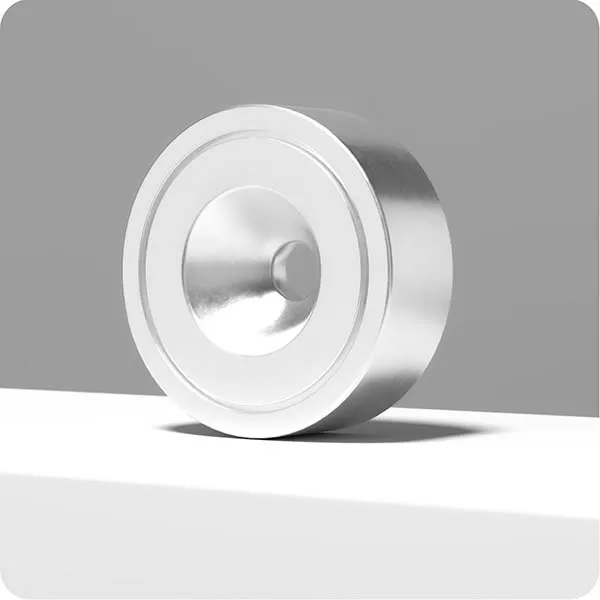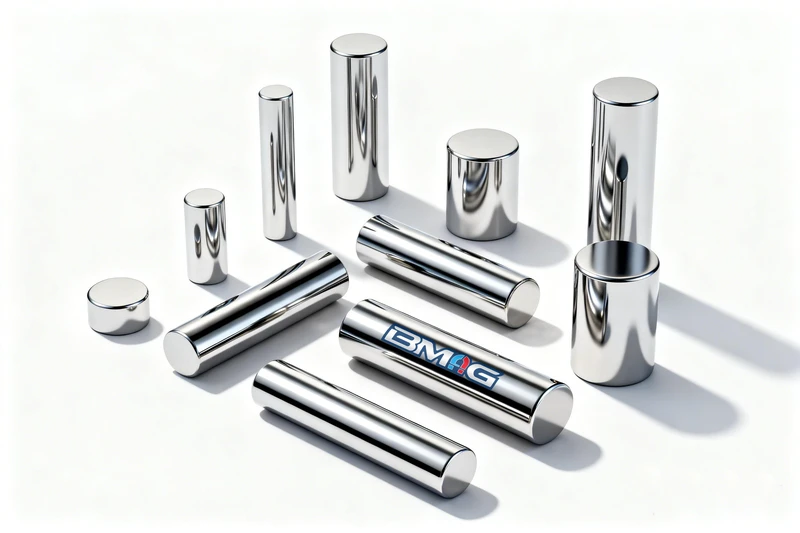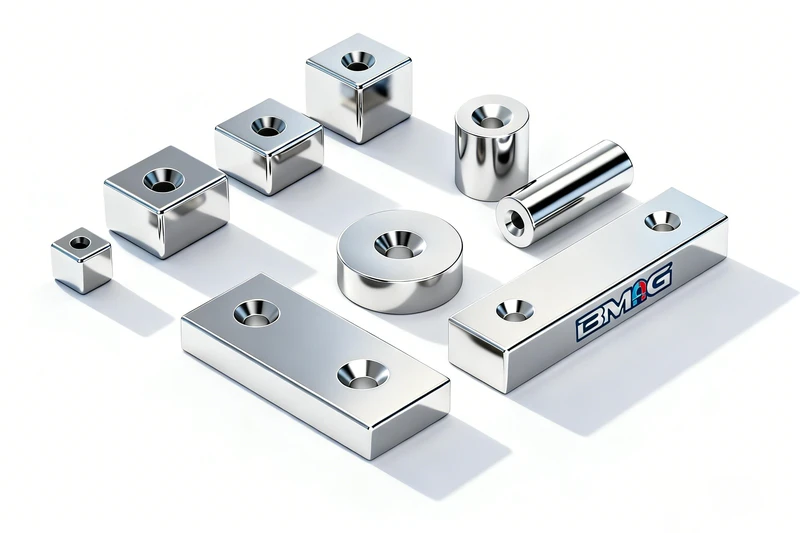









What Are Neodymium Sensor Magnets?
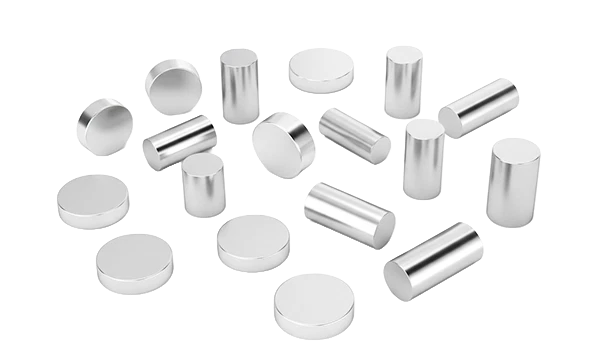
Neodymium sensor magnets are high-performance permanent magnets made from NdFeB (neodymium-iron-boron) material, widely used in Hall effect sensors and other magnetic sensing systems for precise detection of position, speed, and motion.
Why They Are Suitable for Sensor Applications
Neodymium sensor magnets are particularly suitable for sensing systems because they provide:
- High sensitivity support: Strong magnetic fields allow reliable detection by Hall sensors even at small distances
- Compact integration: Small size enables easy installation in tight mechanical structures
- Stable signal output: Consistent magnetic performance ensures accurate and repeatable sensor readings
- Versatile design options: Available in various shapes and grades to match different industrial requirements
Because of these advantages, they are widely used in industrial automation, automotive systems, encoders, and position detection applications.
How Neodymium Sensor Magnets Work in Sensor Systems
Neodymium sensor magnets play a key role in modern sensing systems by generating a stable magnetic field that interacts with sensors such as Hall effect devices, enabling accurate motion and position detection.
Interaction with Hall Effect Sensors
In a Hall effect sensor system, the neodymium magnet acts as the magnetic field source, while the Hall sensor serves as the detection element. When the magnet moves relative to the sensor, or when the magnetic field changes, the sensor detects these variations and responds accordingly. This interaction is widely used in position sensing, speed measurement, and proximity detection applications.
Role in Signal Generation
The neodymium magnet does not directly generate electrical signals. Instead, it creates a stable magnetic field environment. When this field is interrupted or varies due to motion or position changes, the sensor converts these changes into usable electrical signals. This makes the magnet an essential component in triggering and maintaining accurate sensor output.
Magnetic Field Detection Principle
The Hall sensor detects changes in magnetic flux density when exposed to the magnetic field generated by the neodymium magnet. As the magnet approaches or moves away, the strength and direction of the magnetic field change, which the sensor continuously monitors. This allows precise detection of movement, position, or rotation.
Conversion from Magnetic Field to Electrical Signal
Once the magnetic field is detected, the Hall sensor’s internal circuitry converts this physical change into an electrical output signal—either analog or digital. This signal is then processed by control systems for applications such as motor control, speed regulation, or position feedback in industrial and automotive systems.
Industrial application of neodymium sensing magnet
Automotive Industry Applications
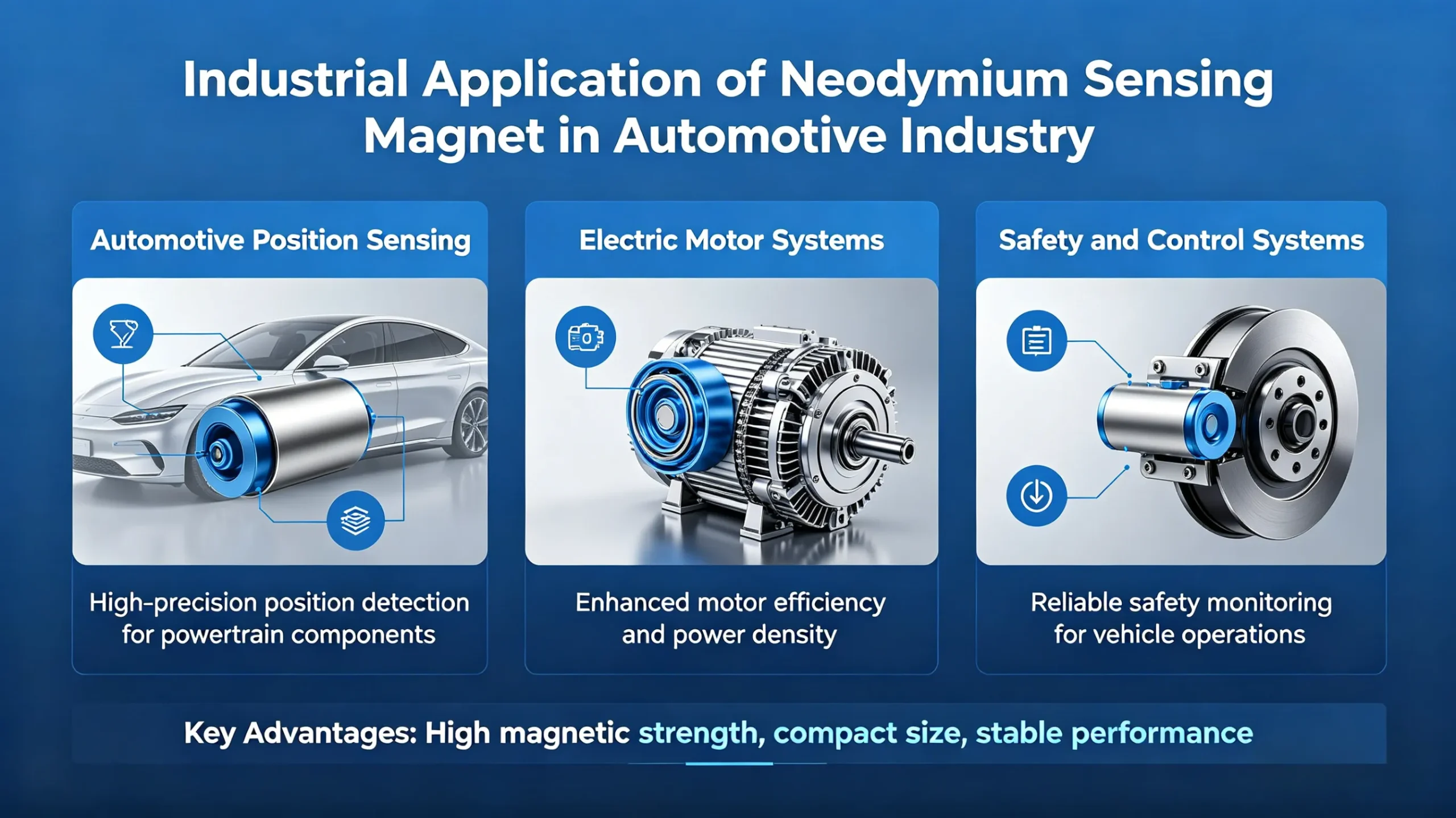
- ABS Wheel Speed Sensors: Neodymium magnets work with Hall sensors to monitor wheel speed in real time, helping prevent wheel lock-up and improve braking safety.
- Throttle Position Sensors: Used to detect throttle valve position by converting magnetic field changes into electrical signals for precise engine control and fuel efficiency.
- Gear Position Detection Systems: Provide accurate gear position feedback to ensure smooth shifting, reliable transmission control, and improved driving performance.
Industrial Automation Applications

- Position Detection in Machinery: Neodymium sensor magnets are used to detect precise positions of moving parts in automated equipment, ensuring accurate control and feedback in production systems.
- Limit Switches: They enable non-contact switching in limit switch systems, improving durability and reliability by reducing mechanical wear.
- Robotic Motion Control: In robotics, sensor magnets provide real-time position and movement feedback for robotic arms, supporting precise motion control and improved automation accuracy.
Electric Motors and Encoders
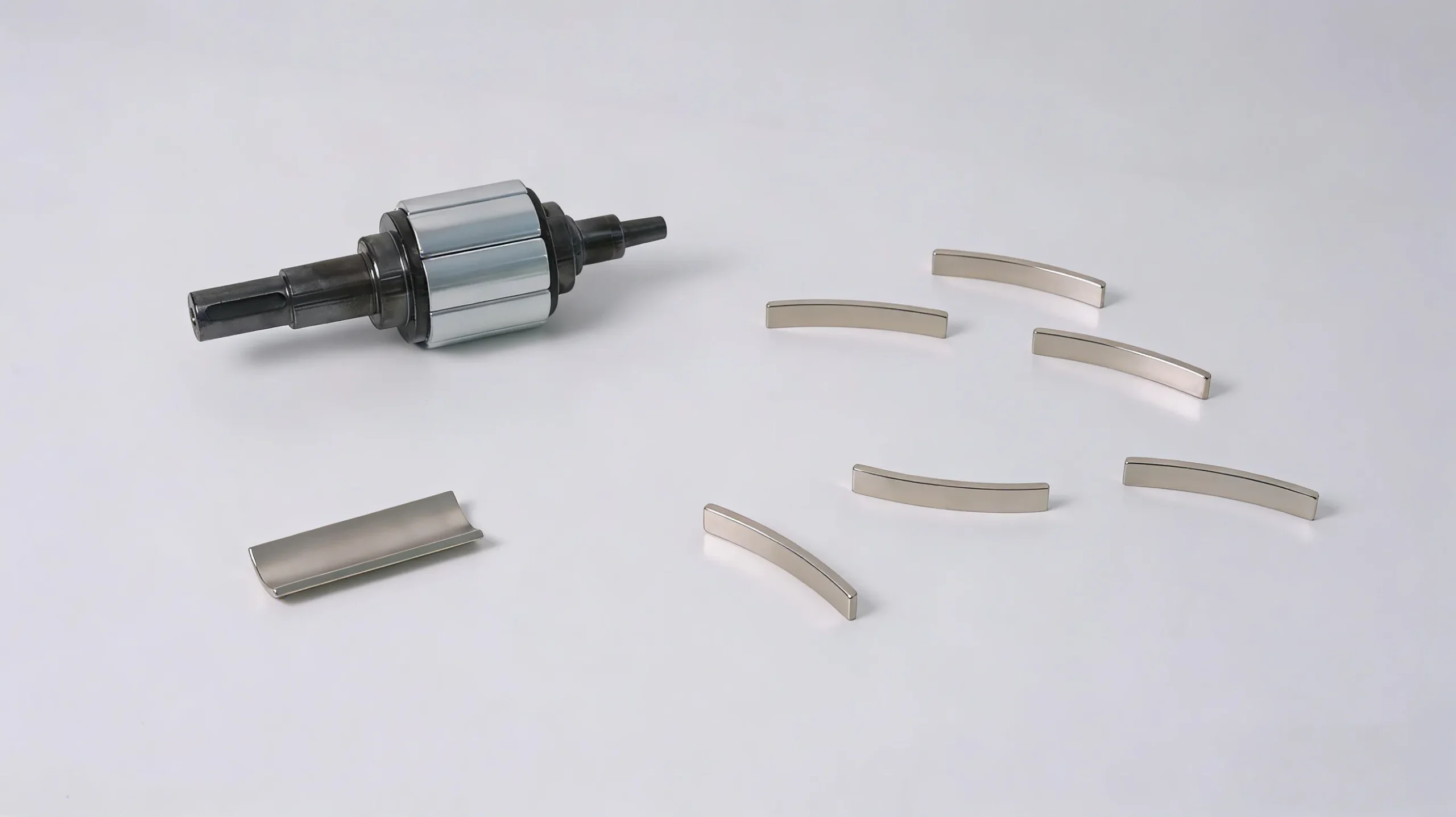
- Rotor Position Sensing: Neodymium sensor magnets are used to detect the exact position of the motor rotor, enabling precise control of motor operation and improving efficiency.
- BLDC Motor Commutation: In brushless DC (BLDC) motors, magnets work with Hall sensors to provide electronic commutation signals, ensuring smooth and stable motor performance.
- Rotary Encoder Systems: They are widely used in encoder systems to measure rotational angle, speed, and direction, providing high-precision feedback for automation and motion control applications.
Medical Technology

- Flow Measurement Systems: Neodymium sensor magnets are used in high-precision flow meters to ensure accurate fluid monitoring in medical and laboratory environments.
- Diagnostic Equipment: They support non-contact sensing in diagnostic devices, enabling reliable and stable measurement performance.
- Precision Motion Control Tools: Used in surgical and medical instruments to provide accurate position feedback for fine and controlled movements.
Consumer Electronics

- Laptop Lid Sleep Sensors: Magnets trigger Hall sensors to automatically switch laptops between active and sleep modes when the lid is opened or closed.
- Smart Home Devices: Used in security systems, door sensors, and smart appliances for reliable position and proximity detection.
- Wearable Fitness Trackers: Enable compact motion and magnetic sensing functions for activity tracking and device control.
Aerospace and Defense
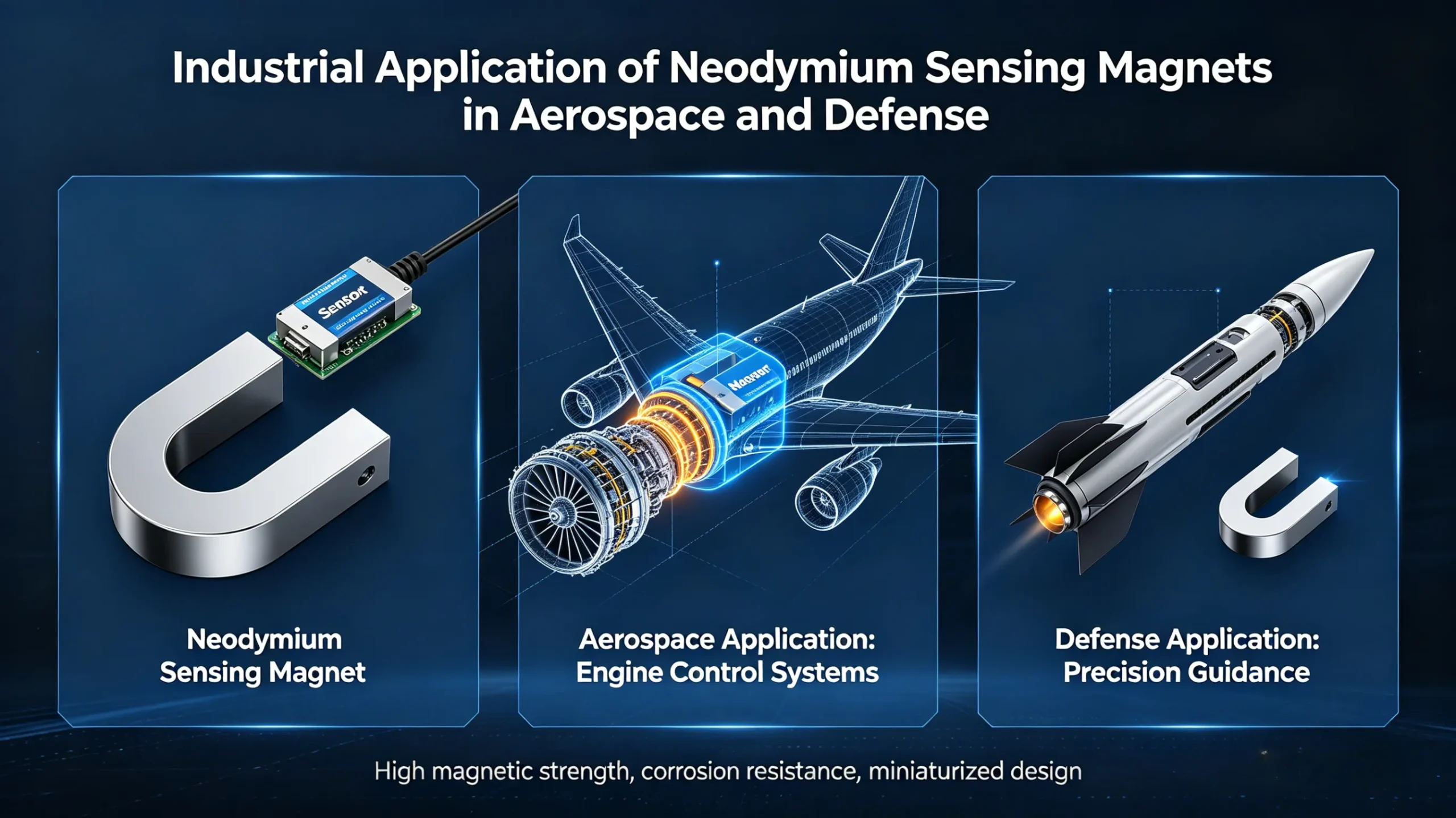
- Flight Control Systems: Provide precise position feedback for critical flight control components, ensuring stable and safe operation.
- Navigation Equipment: Used in navigation systems for accurate motion and orientation detection.
- High-Reliability Sensor Systems: Designed for extreme environments where long-term stability, precision, and reliability are essential.
How to choose the correct neodymium sensor magnet
Magnetic Strength (Grade Selection)
| Magnet Grade | Magnetic Strength Level | Key Characteristics | Typical Sensor Compatibility | Selection Recommendation |
| N35 | Standard | Stable performance, lower cost, moderate field strength | High-sensitivity Hall sensors, short distance detection | Suitable for basic sensing and cost-sensitive applications |
| N38–N40 | Medium | Balanced strength and stability | General industrial Hall sensors | Good for most standard position and proximity sensing systems |
| N42 | Medium-High | Stronger field, widely used industrial grade | Automotive and automation sensors | Recommended for general industrial OEM applications |
| N45 | High | Strong magnetic output with good stability | Precision sensing systems, encoders | Suitable for higher accuracy and medium-distance sensing |
| N48 | Very High | Strong field, improved detection distance | Low-sensitivity sensors, demanding environments | Used in compact designs requiring strong magnetic force |
| N50–N52 | Ultra High | Maximum commercial strength | Long-distance sensing, high-demand systems | Best for high-performance or space-limited applications requiring maximum field strength |
- N35–N52 Overview: Neodymium magnets are commonly available in grades from N35 to N52, where higher numbers indicate stronger magnetic performance.
- Selection Based on Sensor Sensitivity: The magnet grade should match the sensitivity of the Hall sensor to ensure stable detection without signal loss or saturation.
Size and Shape Selection
According to industrial neodymium magnet manufacturers such as BW Magnet, sensor-grade NdFeB magnets are typically classified into block, arc, and customized shapes, each designed for specific sensing applications in Hall effect systems, encoders, and automation equipment.
Block Magnets (Linear Motion Applications)
Block magnets are used in systems requiring linear displacement detection or directional sensing.
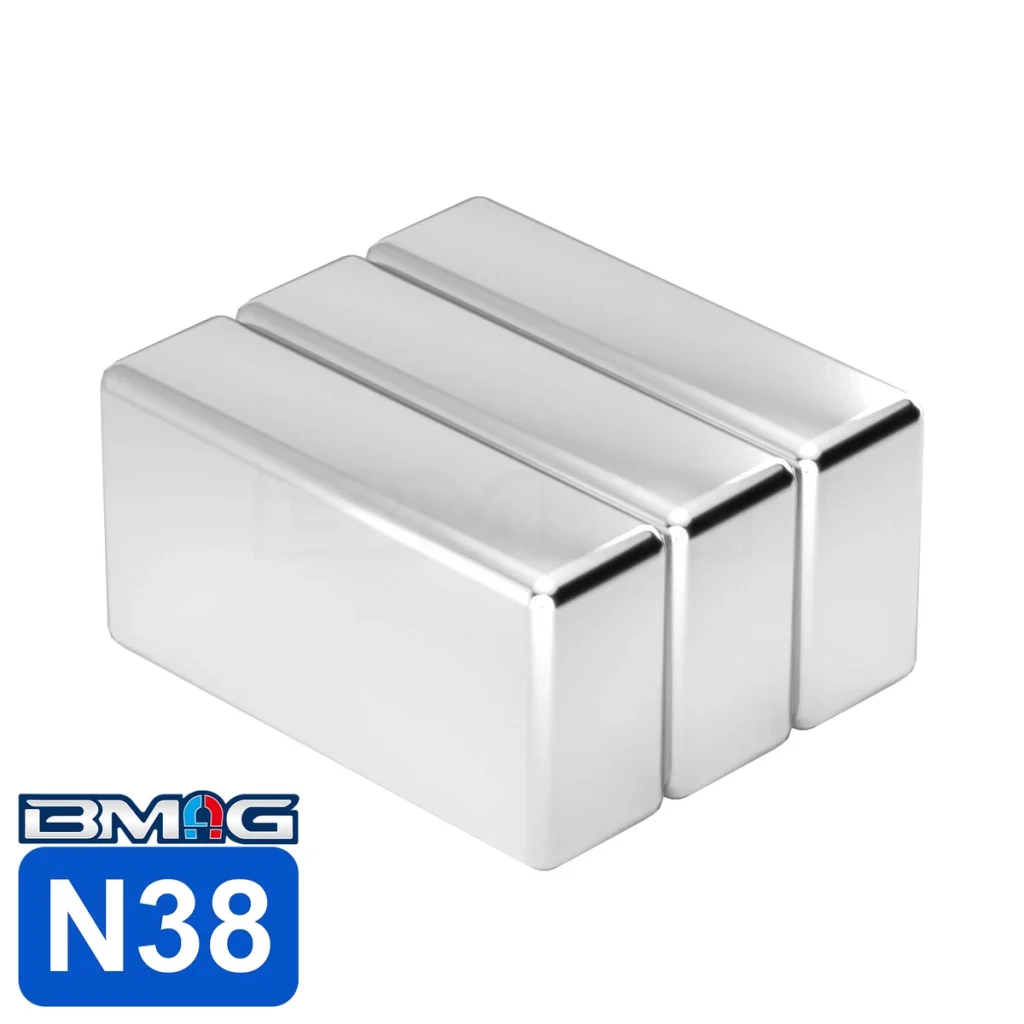
- Typical applications: linear actuators, industrial positioning systems, sliding mechanisms
- Key features: customizable dimensions, strong directional magnetic field
- Best suited for: long-stroke or guided motion systems
Block magnets provide flexible integration for OEM mechanical structures.
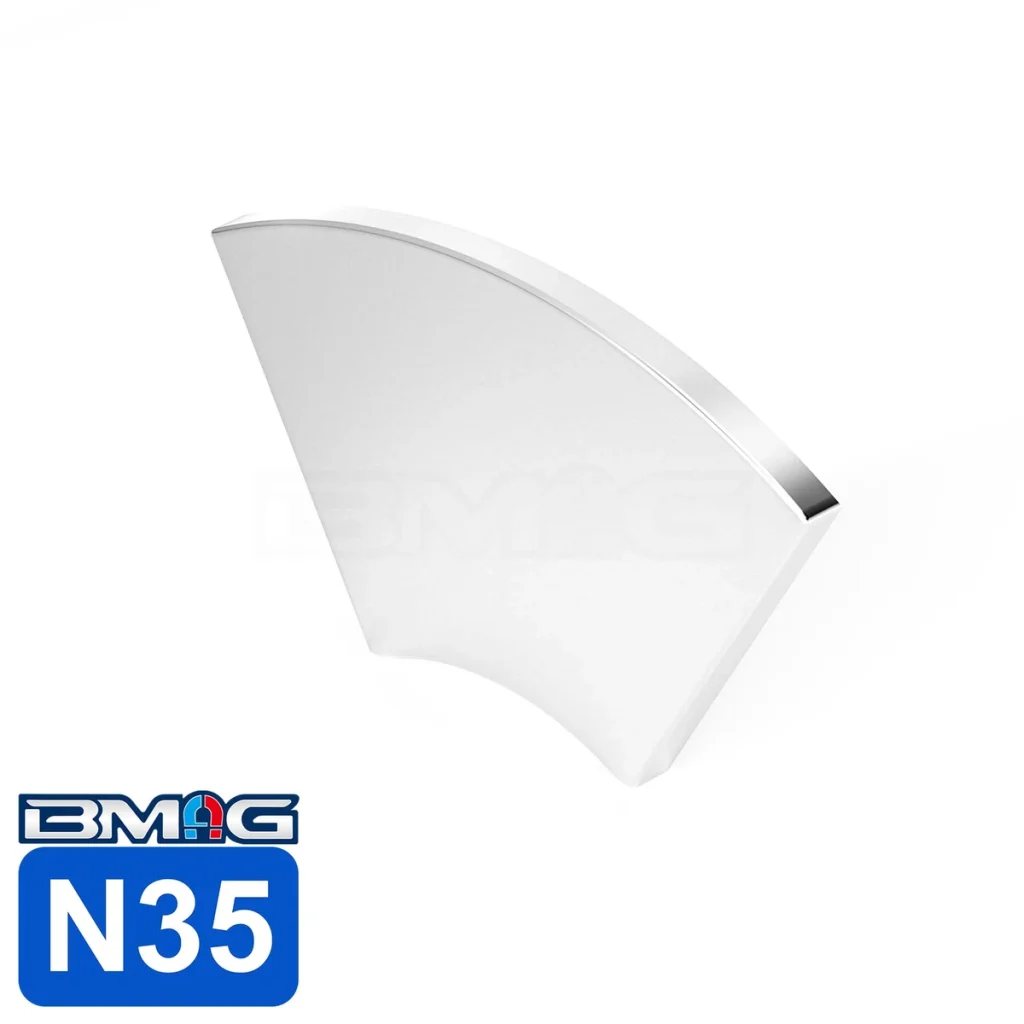
Arc & Customized Magnets (Special Industrial Designs)
Arc magnets and custom-shaped NdFeB magnets are designed for high-performance motors and specialized sensor systems.
- Typical applications: automotive motors, aerospace systems, industrial drives
- Key features: application-specific geometry, optimized magnetic field distribution
- Best suited for: high-precision or high-load environments
Ring Magnets (Rotary & Encoder Systems)
Ring magnets are specifically designed for rotational sensing and encoder applications, often used with Hall sensors in motors and speed detection systems.
- Typical applications: rotary encoders, BLDC motors, shaft position sensing
- Key features: uniform circular field distribution, supports multi-pole magnetization
- Best suited for: 360° continuous rotation measurement
Ring magnets can also be radially or axially magnetized depending on encoder design requirements.
Application-Based Selection: The choice of size and shape depends on installation space, sensing distance, and system design requirements.
Magnetization Direction
The magnetization direction of neodymium sensor magnets must be selected according to the magnet shape and sensing system requirements, as it directly affects magnetic field distribution and Hall sensor performance.
Block Magnets
Block magnets offer more flexibility and can be magnetized in different directions depending on the application.
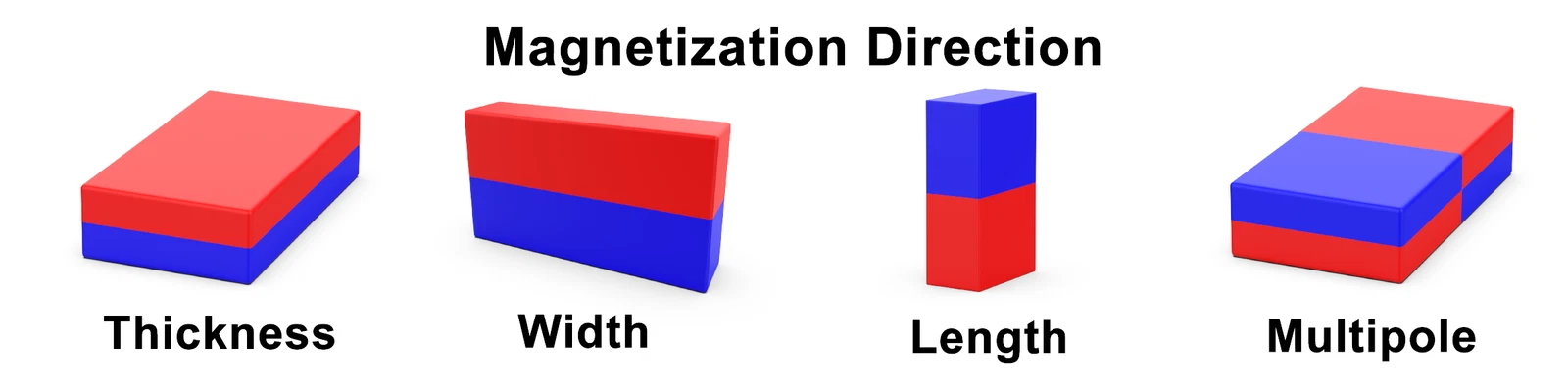
Common magnetization types:
- Axial (through thickness)
- Lengthwise (along the longest side)
Typical use: linear position sensing, industrial automation system.
Why it is used:
- Allows directional magnetic field design
- Suitable for custom sensing layouts
- Can be optimized for specific installation structures
Block magnets are often chosen when custom sensing geometry is required.
Arc Magnets
Arc magnets are curved-shaped neodymium magnets typically used in motor assemblies, rotary systems, and specialized sensor applications. Their magnetization direction is highly customized based on the end-use design.
Common magnetization types
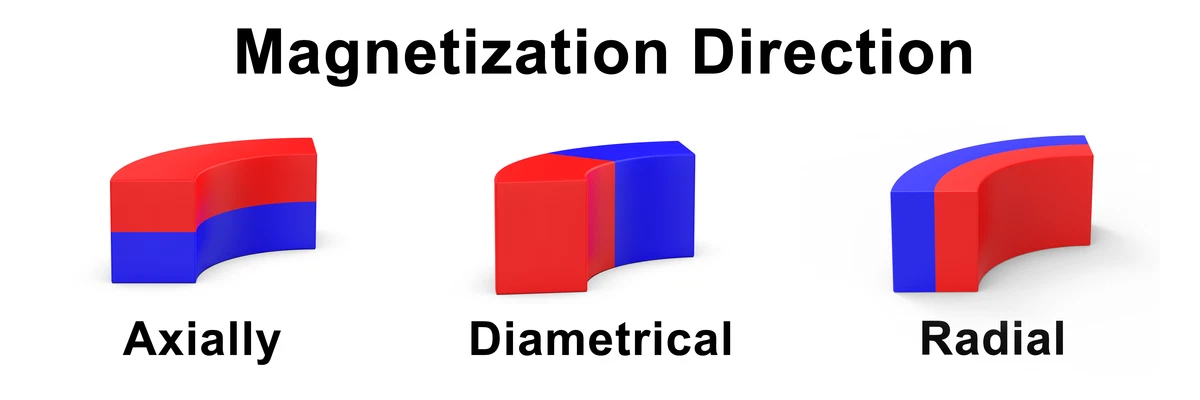
- Axial magnetization (through thickness of the arc)
- Radial magnetization (toward or away from the center of the circle)
- Multi-pole magnetization (alternating poles along the arc)
Typical applications:
- BLDC motors and servo motors
- Automotive drive systems
- High-precision rotary sensing systems
- Aerospace and industrial motor control units
Why arc magnets are used:
- Match the curved structure of motor rotors
- Provide optimized magnetic field distribution along circular paths
- Support high-efficiency torque and stable sensor feedback
Arc magnets are often designed as custom-engineered components.
Ring Magnets
Ring magnets are primarily used in rotational systems and are typically magnetized in radial or multi-pole patterns.
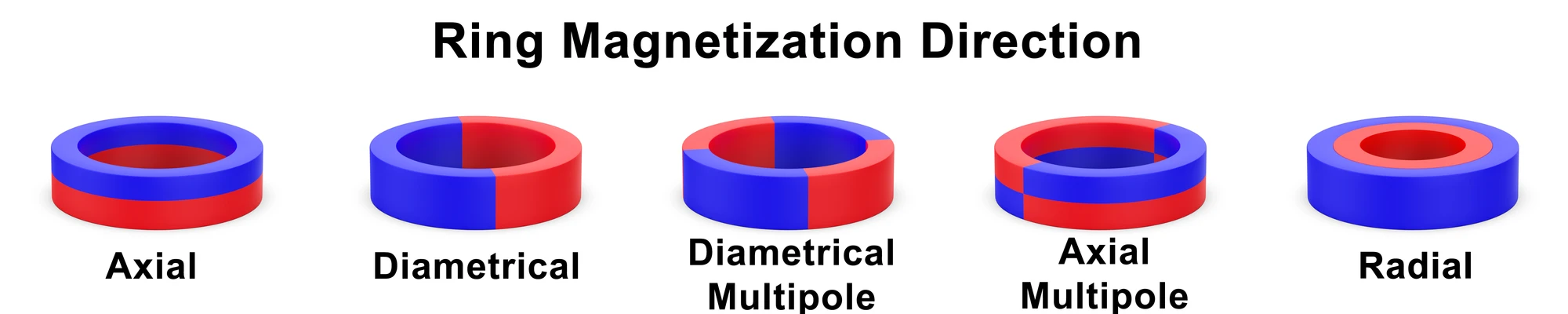
Magnetization types:
- Radial (center outward or inward)
- Multi-pole (alternating N/S poles around the ring)
Typical use: rotary encoders, BLDC motors, speed sensors
Why it is used:
- Enables 360° continuous rotation sensing
- Supports high-resolution position detection
- Provides stable signal output during motion
Radial and multi-pole magnetized ring magnets are essential for encoder and motor control applications.
In real-world engineering, magnet shape and magnetization direction must always be designed together to achieve optimal Hall sensor performance.
Air Gap Considerations
- Distance vs Signal Strength: The air gap between magnet and sensor directly affects magnetic field intensity and detection reliability.
- Avoiding Saturation or Weak Signals: Proper spacing is essential to prevent overly strong signals (saturation) or weak detection issues.
Temperature Resistance
- High-Temperature Grades (H, SH, UH): These grades are designed for environments with elevated operating temperatures to maintain magnetic stability.
- Industrial Environment Considerations: Temperature, vibration, and continuous operation conditions should all be considered during selection.
| Grade Type | Maximum Operating Temperature | Magnetic Stability | Typical Applications | Selection Recommendation |
| Standard Grades (N35–N52) | 80℃ / 176°F | Good under normal conditions | Consumer electronics, indoor Hall sensors, basic automation systems | Use for low-temperature, stable indoor environments |
| H Grade | 120℃ / 248°F | Improved thermal resistance | Industrial motors, automotive sensors, machinery systems | Suitable for moderate heat environments with continuous operation |
| SH Grade | 150℃ / 302°F | High thermal stability | Automotive engine compartments, industrial automation equipment | Recommended for high-temperature industrial conditions |
| UH Grade | 180℃ / 356°F | Very high thermal resistance | Aerospace systems, high-performance motors, extreme environments | Best for critical high-temperature and harsh operating conditions |
| EH Grade | 200℃ / 392°F | Maximum stability (custom) | Specialized aerospace, defense, extreme engineering systems | Used for custom high-end applications with extreme heat exposure |
Coating and Protection
When selecting a coating for neodymium sensor magnets, consider the following:
- Operating environment (indoor vs outdoor)
- Humidity and corrosion level
- Required product lifespan
- Assembly precision requirements
In general:
- Ni-Cu-Ni = standard industrial use
- Epoxy = harsh or high-risk environments
Proper coating selection ensures not only magnet durability, but also long-term stability of sensor performance in real applications.
Common Mistakes in Neodymium Sensor Magnets Selection
| Common Mistake | Problem Description | Impact on Performance | Recommended Solution |
| Oversized Magnet Causing Saturation | Magnet strength is too high for the sensor’s sensitivity range | Signal overload, unstable output, inaccurate readings | Select appropriate grade (e.g., N35–N52) based on sensor specification |
| Incorrect Pole Orientation | N/S poles are not aligned correctly with sensor direction | Failed triggering or inconsistent signal output | Ensure correct axial/radial magnet orientation during installation |
| Ignoring Air Gap Design | Distance between magnet and sensor is not properly controlled | Weak signal or excessive magnetic influence | Optimize air gap according to sensor sensitivity range |
| Incorrect Environmental Rating Selection | Magnet not suitable for temperature or corrosive conditions | Performance degradation and reduced lifespan | Choose proper coating (Ni-Cu-Ni or epoxy) and high-temp grades (H/SH/UH) |
Conclusion
Neodymium sensor magnets are widely used in automotive, industrial, electronics, medical, and aerospace applications. Selecting the right magnet—based on grade, size, magnetization direction, and working environment—is essential for ensuring stable and accurate sensor performance.
Proper matching between the magnet and sensor system helps improve reliability and reduce signal errors in real applications.
BMAG Magnet also provide custom neodymium sensor magnet solutions (OEM/ODM) to meet specific design and application requirements. Please contact us for technical support or quotation.