








A
فجوة هوائية
منخفضالنفاذية انقطاع أو فجوة داخل مسار التدفق المغناطيسي في دائرة مغناطيسية. وعلى الرغم من أن هذا المصطلح يتكون عادةً من الهواء، إلا أنه يشمل أيضاً أي وسيط غير مغناطيسي مثل الطلاء أو الطلاء أو فواصل الألومنيوم. وتؤدي الفجوة الهوائية إلى زيادة كبيرة في الممانعة المغناطيسية، مما يعني الحاجة إلى قوة دافعة مغناطيسية أكبر للحفاظ على كثافة التدفق المستهدفة عبر الفجوة.
النيكو
مجموعة من السبائك المغناطيسية الدائمة تتكون أساسًا من الألمنيوم والنيكل والكوبالت والحديد. تُعرف هذه المواد بقوة مغناطيسية عالية واستقرار حراري ممتاز، وتحتفظ بالأداء المغناطيسي في البيئات المسببة للتآكل إلى حد ما وفي درجات الحرارة المرتفعة.
أم (مساحة المغناطيس)
مساحة المقطع العرضي للمغناطيس عمودياً على خط التدفق المغناطيسي المركزي، تقاس بالسنتيمتر المربع (سم مربع) في موقع معين. في حسابات التصميم الهندسي، يتم تحديد Am عادةً عند القسم المحايد للمغناطيس.
غير متجانس
يصف مادة تختلف خصائصها المغناطيسية تبعًا لاتجاه القياس أو المغنطة. تمتلك المغناطيسات غير المتشابهة محور “سهل” مفضل للمغنطة، يتم إنشاؤه أثناء التصنيع من خلال التشكيل الهندسي أو المحاذاة البلورية المغناطيسية.
كم (مساحة فجوة الهواء)
متوسط مساحة المقطع العرضي لـ فجوة الهواء منطقة يحدث فيها تفاعل مغناطيسي وظيفي، مقاسة بالسنتيمتر المربع (سم مربع) في مستوى عمودي على خط التدفق المركزي.
الجمعية الأمريكية لاختبار المواد.
الجمعية الأمريكية للاختبار والمواد، وهي منظمة دولية تقوم بتطوير ونشر المعايير الفنية الطوعية للمواد والمنتجات والأنظمة والخدمات.
ممغنط محورياً
مغناطيس ممغنط ممغنط بين سطحين طرفيين مسطحين متوازيين، ويقع قطباه المغناطيسيان الشمالي والجنوبي على هذين الوجهين المتقابلين.
B
B (الحث المغناطيسي)
المجال المغناطيسي المستحث في نقطة بواسطة قوة مجال مغناطيسي مطبقة (H). يمثل المجموع المتجهي لقوة المجال المطبقة والحث الذاتي الناتج. الوحدة: جاوس (ج.ج.س.أو تسلا (وحدة قياس دولية.).
بدي (تحفيز البقايا)
الحث المغناطيسي المتبقي في مادة مغناطيسية بعد إزالة المجال المغناطيسي المشبع المطبق Hs. الوحدات: غوس.
ب/د (ميل خط التشغيل)
نسبة الحث المتبقي إلى شدة المجال المغنطيسي. وهذا يكافئ معامل النفاذية Pc، ويشار إليه أيضًا باسم خط القص أو خط الحمل أو نفاذية الوحدة.
بدهد (منتج طاقة)
الطاقة المغناطيسية التي يمكن أن توفرها المادة لدائرة خارجية عند التشغيل عند نقطة محددة على منحنى إزالة المغناطيسية. الوحدات: ميغاوس-أورستد (MGOe).
(BH)max (أقصى حاصل للطاقة)

القيمة القصوى لحاصل ضرب Bd و Hd على منحنى إزالة المغنطة. يعد المؤشر الرئيسي لإمكانات الطاقة الناتجة للمادة المغناطيسية.
بي (الاستقراء الذاتي)
المساهمة الفريدة للمادة المغناطيسية نفسها في الحث المغناطيسي الكلي (B). تُعرَّف بأنها الفرق المتجهي بين الحث في المادة والحث الذي قد يوجد في الفراغ تحت نفس شدة المجال (H). الصيغة: Bi = B - H (ملاحظة: Bi و B بالجاوس؛ H بالأورستد. للتحويل إلى النظام الدولي للوحدات، 1 أمبير/متر = 0.01256 أورستد).
بيس (الحث الجوهري المشبع)
أقصى حث جوهري قابل للتحقيق في مادة مغناطيسية معينة تحت ظروف التشبع.
بم (حفز الارتداد)
المجال المغناطيسي المتبقي في مادة ممغنطة بعد المغنطة وتثبيتها اللاحق للتطبيق النهائي. الوحدات: غوس.
Br (المقاومة المتبقية)
المجال المغناطيسي المتبقي الذي يبقى في مادة مغناطيسية عند إزالة المجال المسلط القوة المغناطيسية, ، بعد التشبع في دائرة مغناطيسية مغلقة. الوحدات: غوس.
منحنى B-H
تمثيل بياني يوضح العلاقة بين كثافة الفيض المغناطيسي (B) وقوة المجال المغناطيسي المطبق (H).
C
ج.ج.س.
نظام السنتيمتر-جرام-ثانية، وهو نظام متري تاريخي يستخدم على نطاق واسع في المغناطيسية.
دائرة مغلقة
تكوين يحتوى فيه مسار التدفق المغناطيسي الخارجي بالكاملالنفاذية المواد، مما يقلل من تسرب التدفق ويتيح دوران التدفق بكفاءة من القطب الشمالي إلى القطب الجنوبي.
القوة القسرية (Hc)
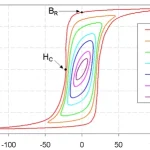
قوة المجال المزال المغناطيسي المطلوبة لتقليل المغناطيسية المتبقية جui.
Coercive Force – Normal (HcB)
المجال المغناطيسي المطبق المطلوب لتقليل الحث المغناطيسي الطبيعي (B) إلى الصفر.
Coercive Force – Intrinsic (Hci)
معامل حرج يمثل مقاومة المادة المغناطيسية الكامنة لإزالة المغناطيسية. إنها قوة المجال اللازمة لتقليل الحث الأصلي (باي) إلى صفر. الوحدات: الأويرستد.
درجة حرارة كوري (Tc)
درجة الحرارة المميزة التي تفقد فوقها السبيكة المغناطيسية المغناطيسية مغنطستها التلقائية وسلوكها المغناطيسي الحديدي بسبب التغيرات الهيكلية على المستوى الذري.
D
إزالة المغنطة
العملية التي يتم بها تقليل التدفق المغناطيسي داخل مغناطيس إلى مستوى أقل أو إلغاؤه، وغالبًا ما يحدث بسبب درجات الحرارة المرتفعة، أو المجالات المغناطيسية الخارجية المعارضة، أو التشغيل في دائرة مفتوحة.
منحنى إزالة المغناطيسية
الربع الثاني من حلقة التباطؤ الرئيسية، والتي تميز السلوك المغناطيسي وأداء المادة تحت ظروف حمل التشغيل الحقيقية.
قوة إزالة المغنطة
أي تأثير خارجي أو داخلي - بما في ذلك المجالات المغناطيسية المتعارضة، أو الصدمات الحرارية، أو التأثير الميكانيكي، أو الاهتزاز - يعمل على تقليل مستوى مغنطة المادة المغناطيسية.
كثافة
كتلة المادة لكل وحدة حجم، وعادة ما يتم التعبير عنها بالجرام لكل سنتيمتر مكعب (جم/سم³).
ديامغناطيسي
مواد ذات مغناطيسية النفاذية أقل بقليل من 1 (مثل النحاس والفضة والذهب) التي تنتج قوة تنافر ضعيفة عند تعرضها لمجال مغناطيسي خارجي.
ممغنط قطريًا
مغناطيسات أسطوانية يكون اتجاه المغنطة فيها موازياً للقطر، بدلاً من أن يكون على طول المحور المركزي.
نسبة الأبعاد
نسبة الطول المغناطيسي للمغناطيس إلى قطره (أو القطر المكافئ للأشكال غير الدائرية).
التفاوت البعدي
النطاق المسموح به للانحراف عن الأبعاد الاسمية للمغناطيس النهائي، مما يعكس حدود التصنيع العملية.
نطاقات
مناطق مجهرية داخل سبيكة مغناطيسية حيث تتوافق اللحظات المغناطيسية للذرات بشكل موحد، مما يخلق اتجاهًا مغناطيسيًا مشتركًا واحدًا.
E
التيارات الدوامية
التيارات الكهربائية الدوارة المتولدة داخل المواد الموصلة عند تعرضها لمجالات مغناطيسية متغيرة. هذه التيارات تولد قوى مغناطيسية متعارضة ويمكن أن تؤدي إلى خسائر حرارية غير مرغوب فيها أو يمكن تسخيرها للتخميد المغناطيسي.
كهرومغناطيس
مغناطيس مؤقت يتألف من ملف لولبي ملفوف حول قلب مغناطيسي حديدي؛ يولد مجالاً مغناطيسياً فقط أثناء تطبيق التيار الكهربائي.
القوة الدافعة الكهربائية (الق.د.ك.)
كمية الشغل المبذول لكل وحدة شحنة. الوحدات: فولت.
F
عامل التسرب (F)
A dimensionless ratio that accounts for flux leakage from the magnetic circuit. It is defined as the ratio between the magnetic flux at the magnet’s neutral section and the average flux in the فجوة الهواء: F=(بوهمأم/بغأغ..
و (عامل التردد)
نسبة بلا أبعاد تمثل ممانعة الدائرة المغناطيسية الظاهرية، وتعوض عن معاملة H كثابت.
القوة الدافعة المغناطيسية
وحدة قياس الجهد المغناطيسيج.ج.س.) أمبير لفة (وحدة قياس دولية.).
فيري مغناطيسي
فئة من المواد المغناطيسية ( مثل الفريت) التي تظهر نسبة عالية النفاذية ويُظهر التلاكؤ ولكن عادةً ما تمتلك استقراء تشبع أقل من المواد المغناطيسية الحديدية.
الفريت
مادة مغناطيسية حديدية، وعادة ما تكون مركباً من الباريوم أو السترونتيوم وأكسيد الحديد، يتم تصنيعها من خلال التلبيد أو الربط.
فِيرومَغْنَطِيسِيّ
مواد ذات مغنطة تلقائية عالية و النفاذية أكبر بكثير من 1 (مثل الحديد والنيكل والكوبالت).
تدفق (ø)
A measurable concept describing the total magnetic field “flow.” Units: Maxwells (ج.ج.س.) أو ويبراوحدة قياس دولية.).
كثافة الفيض (B)
التركيز المغناطيسي لكل وحدة مساحة. الوحدات: غوس (ج.ج.س.أو تسلا (وحدة قياس دولية.).
مقياس التدفق
مكامل إلكتروني يستخدم مع ملف البحث لقياس التدفق المغناطيسي الكلي.
حقول هامشية
تسريب تدفق مرتبطة بتأثيرات الحافة في الدائرة المغناطيسية.
G
غوس
وحدة CGS للحث المغناطيسي (B)، تُعرَّف بأنها واحد ماكسويل لكل سنتيمتر مربع.
جهاز قياس غاوس
جهاز يستخدم لقياس الحث المغناطيسي اللحظي (B) عند نقطة محددة.
جيلبرت
ال ج.ج.س. وحدة القوة الدافعة المغناطيسية (MMF).
H
H (شدة المجال المغناطيسي)
مقياس الكمية المتجهة التي تحدد قدرة الجسم أو التيار على حث مجال مغناطيسي. الوحدات: الأويرستد.
إتش سي
رؤية القوة القسرية.
واجهة الإنسان والحاسوب
رؤية القوة القسرية الجوهرية.
هد
قيمة H على منحنى إزالة المغنطة المقابلة لـ Bd. الوحدات: أورستد.
إتش إم في
قيمة H المقابلة لممانعة الارتداد Bm. الوحدات: أورستد.
هو
قوة المجال المغناطيسي عند نقطة أقصى حاصل للطاقة (BH) كحد أقصىالوحدات: أورستد. (مرجع تقاطعي: بو).
مجال متجانس
مجال مغناطيسي تكون فيه خطوط القوة منتظمة، مما يؤدي إلى قوة مجال متساوية في جميع المواقع ضمن المنطقة المحددة.
قوة المغنطة الصافية الفعالة
القوة المغناطيسية المطلوبة لإشباع مادة معينة. الوحد.
ح
منحنى مغلق يتم الحصول عليه عن طريق رسم الحث المغناطيسي (B) مقابل القوة المغناطيسية (H) كمادة يتم تدويرها عبر التشبع والتشبع العكسي.
I
I.E.C.
The International Electrotechnical Commission, an international organization that develops and publishes standards for electrical, electronic, and related technologies.
Induction (B)
Refer to the definition of Magnetic Induction, which is the magnetic field induced by a field strength (H) at a given point, representing the vector sum of the magnetic field strength and the resultant intrinsic induction.
Intrinsic Coercive Force (Hci)
A key characteristic of magnetic materials, referring to their inherent ability to resist permanent demagnetization caused by external factors such as opposing magnetic fields or high temperatures.
Intrinsic Induction (Bi)
Refer to the definition of باي, which is the specific contribution of the magnetic material to the total magnetic induction (B), defined as the vector difference between the induction in the material and the induction in a vacuum under the same field strength (H).
Irreversible Losses
Partial demagnetization of a magnetic material caused by external influences including extreme temperatures, mechanical shock, or opposing magnetic fields. These losses cannot be reversed by restoring the material to its original conditions and require remagnetization to recover the original magnetic performance.
Isotropic
Describing a magnetic material that has uniform magnetic properties in all directions, with no preferred or “easy” axis of magnetization. Such materials can be magnetized effectively in any direction during application.
K
Keeper
A component made of high-النفاذية material, usually mild steel, that is placed between the poles of a magnet. Its primary function is to reduce the reluctance of the فجوة الهواء, protect magnets—especially AlNiCo magnets—from demagnetizing influences, and maintain the magnet’s تدفق over time.
Knee of the Demagnetization Curve
A critical point on the B−H demagnetization curve where the curve deviates from linearity. If the magnet’s operating point falls below this knee, the magnetic induction (B) will change rapidly even with small variations in magnetic field strength (H), and the magnet will be unable to recover its original تدفق density. For example, Alnico 5 magnets exhibit a distinct knee at room temperature.
Leakage Factor

Refer to the definition of F, a dimensionless ratio that accounts for magnetic flux leakage in a magnetic circuit. It is calculated as the ratio of the magnetic flux at the magnet’s neutral section to the average flux in the فجوة الهواء: F=(Bm·Am)/(Bg·Ag)
Leakage Flux
Magnetic تدفق that does not follow the intended or useful path of the magnetic circuit. Instead, it escapes to the surrounding environment, resulting in reduced efficiency of the magnetic system.
lg (Length of Air Gap)
The length of the path traveled by the central magnetic flux line across the فجوة الهواء in a magnetic circuit, measured in centimeters.
lm (Length of Magnet)
The total length of the magnet material that the central flux line passes through along the centerline of the magnetic circuit.
lm/D
Refer to the definition of Dimension Ratio, which is the ratio of the magnet’s length (lm) to its diameter (or equivalent diameter for non-cylindrical magnets).
Load Line
A straight line drawn from the origin of the demagnetization curve with a slope equal to the ratio of magnetic induction (B) to magnetic field strength (H). The point where this line intersects the demagnetization curve represents the actual operating point of the magnet in a specific application.
M
Magnetic Assemblies
A functional assembly composed of magnetic and non-magnetic materials, often incorporating steel components to conduct and concentrate magnetic flux to a specific workface, thereby enhancing the performance of the magnetic system.
Magnetic Axis
The direction in which the magnetic domains of an anisotropic magnet are aligned during manufacturing, which serves as the material’s preferred axis of magnetization.
Magnetic Circuit
An integrated system consisting of magnets, flux-conducting elements (such as steel), air gaps, and potentially electrical currents, designed to form a closed path for magnetic flux to flow efficiently.
Magnetic Dipole Moment (m)
A physical quantity that describes the torque a magnet experiences when placed in an external magnetic field. It is calculated using the formula: m=Br·V/μ0, where Br is the Residual Flux Density in Tesla, V is the volume of the magnet in cubic meters, and μ0 is the النفاذية of a vacuum.
Magnetic Field Strength (H)
Refer to the definition of H, a vector quantity that measures the ability of a body or electric current to induce a magnetic field, with units of Oersteds (ج.ج.س.) or Amperes per meter (وحدة قياس دولية.).
الحث المغناطيسي (ب)
Refer to the definition of B, the magnetic field induced at a given point by an applied magnetic field strength (H), representing the vector sum of the magnetic field strength and the resultant intrinsic induction. Its units are غوس (ج.ج.س.أو تسلا (وحدة قياس دولية.).
Magnetic Length
The physical length of a magnet measured along the direction of its magnetization, which directly affects the magnet’s magnetic performance and flux output.
Magnetic Line of Force
Imaginary lines used to visually represent the direction and intensity of a magnetic field. At any point along these lines, the tangent indicates the direction of the magnetic flux.
Magnetic Pole
The region on a magnet where magnetic flux lines are most concentrated, typically referred to as the North pole (where flux exits) and the South pole (where flux enters).
Magnetization (M)
The process by which a material is subjected to an external magnetic field, causing its magnetic domains to align and thereby producing an external magnetic field.
Magnetized
A state in which a material retains the ability to exert an external magnetic field after being exposed to an external القوة المغناطيسية, resulting from the alignment of its magnetic domains.
Magnetizing Force (H)
The magnetomotive force per unit length of the magnet, which determines the extent to which the material can be magnetized. It is a key parameter in controlling the magnetization process.
Magnetomotive Force (mmf)
Refer to the definition of F, the magnetic potential difference that drives the flow of magnetic flux in a magnetic circuit, with units of Gilberts (ج.ج.س.) أمبير لفة (وحدة قياس دولية.).
Major Hysteresis Loop
A closed curve obtained by plotting magnetic induction (B) against magnetic field strength (H) as a magnetic material is cycled between positive and negative saturation. This loop fully characterizes the material’s magnetic hysteresis properties.
Material Grade
A classification system used to identify the magnetic properties of a material, with specific grades indicating key parameters such as maximum energy product. For example, N42 is a common grade for Neodymium magnets, indicating a maximum energy product of approximately 42 MGOe.
Maximum Energy Product (BHmax)
Refer to the definition of (BH) كحد أقصى, the peak product of magnetic induction (Bd) and demagnetizing force (Hd) on the demagnetization curve, which serves as the primary metric for evaluating a magnet material’s potential energy output.
Maximum Operating Temperature (Tmax)
The highest temperature at which a magnet can be used continuously without experiencing significant long-term magnetic instability, irreversible losses, or structural damage. Exceeding this temperature may permanently degrade the magnet’s performance.
N
Neodymium Iron Boron (NdFeB)
A high-energy rare-earth material (Nd2Fe14B). Due to its high iron content, NdFeB is highly susceptible to corrosion and rust if not properly sealed from the environment.
Neutral Section
The plane passing through a magnet perpendicular to its central flux line at the point of maximum flux.
North Pole
The “north-seeking” pole of a magnet which, when freely suspended, points toward the Earth’s magnetic North.
O
Oersted (Oe)
ال ج.ج.س. unit for magnetic field strength (H).
Open Circuit
A condition where a magnet has no external flux path of high-النفاذية material.
Operating Line
A straight line through the origin of the demagnetization curve with a slope of -Bd/Hd.
Operating Point
The specific point on the demagnetization curve where the magnet functions, defined by the intersection of the load line and the curve.
Orientation Direction
The “easy axis” along which an anisotropic magnet must be magnetized to achieve its specified properties.
P
Paramagnetic Material
Materials with a النفاذية slightly greater than 1 (e.g., aluminum, platinum) that are weakly attracted to magnetic fields.
Permanent Magnet
A material that retains its magnetic properties after the external magnetizing field is removed.
Permeability (µ)
The ratio of magnetic induction to القوة المغناطيسية (B/H).
Permeability of Free Space (µo)
The constant for B/H in a vacuum (4π×10^−7 H/m).
Permeameter
An industrial instrument used to measure the magnetic characteristics of material specimens.
Permeance (P)
The reciprocal of reluctance; a measure of the ease with which flux passes through a material.
Permeance Coefficient (Pc)
A dimensionless value representing the “operating slope” of a magnet, determined by geometry and its magnetic environment.
Plating/Coating
Essential protective layers (e.g., Nickel-Copper-Nickel, Gold, Epoxy, Rubber) applied to Neodymium magnets to seal the iron component against corrosion and environmental degradation.
Polarity
The property that differentiates the North pole from the South pole.
Pole
رؤية Magnetic Pole.
Pole Pieces
Ferromagnetic materials used to shape, concentrate, or redirect lines of flux.
قوة السحب
The force required to separate a magnet from a flat steel plate under perpendicular force.
Pull-Gap Curve
A graphical plot of pull strength versus an increasing range of air gaps.
R
Rare Earth
High-energy magnets utilizing lanthanide elements, primarily NdFeB and SmCo.
Recoil Induction (Bm)
Induction remaining in a material after conditioning for final use.
Recoil Permeability
The average slope of the recoil hysteresis loop.
Relative Permeability
The ratio of a material’s النفاذية to the permeability of a vacuum.
Reluctance (R)
The resistance of a magnetic circuit to the passage of flux (R=F/ø).
المغناطيسية المتبقية (Br)
The induction remaining in a magnetic circuit after the removal of the applied field.
Remanent Induction (Bd)
رؤية البقايا.
Residual Flux Density (Brmax)
The maximum flux output from a material at zero فجوة الهواء.
Residual Induction (Br)
رؤية بر.
Return Path
Conduction elements in a circuit that provide a low-reluctance path for magnetic flux.
S
ساماريوم كوبالت (SmCo)
A rare-earth material characterized by high magnetic energy and superior performance at elevated temperatures.
Saturation
The state in which all elementary magnetic moments are aligned, such that further increases in the applied field result in no additional increase in intrinsic induction.
Search Coil
A coil of wire used with a flux meter to measure changes in flux linkage within a field.
Shunt
A high-النفاذية component used to divert flux or protect a magnet from demagnetization; synonymous with a keeper.
S.I. (System International)
The standard metric system of units (Meter, Kilogram, Second).
Sintered
A material manufactured by compacting powder and subjecting it to heat treatment to achieve full density and magnetic orientation.
Soft Magnetic Material
Materials that are easily magnetized and demagnetized, typically used for flux conduction.
South Pole
The pole of a magnet attracted to the Earth’s South Pole.
Stabilization
The process of exposing a magnet to demagnetizing influences (heat or opposing fields) to prevent future irreversible losses during operation.
Stacking
The process of combining magnets to increase net pull strength.
Surface Field (Surface Gauss)
The magnetic field strength at the surface of the magnet pole, as measured by a Gauss meter.
T
Tc
رؤية درجة حرارة كوري
Temperature Coefficient
A value describing the reversible percentage change in a magnetic property per unit of temperature. For remanence (Br), the logic is: Br(%) = [Br(T1) − Br(T2)] / [Br(T1) ⋅ (T2 − T1)] × 100%. Note: A similar expression and logic apply to coercivity (HcB and Hci).
Tesla
ال وحدة قياس دولية. unit for magnetic induction. 1 Tesla = 10,000 غوس.
W
Weber
ال وحدة قياس دولية. unit for total magnetic flux. 1 Weber = 10^8 Maxwells.

Encountered technical challenges with your magnet application?
The selection of magnets directly impacts product performance. Whether it’s high temperature resistance requirements, extremely high magnetic energy product demands, or complex shape customization, BMAG’s professional magnetic material engineer team can provide you with comprehensive technical support and selection recommendations.
Contact Engineer Now / Get Technical Solution