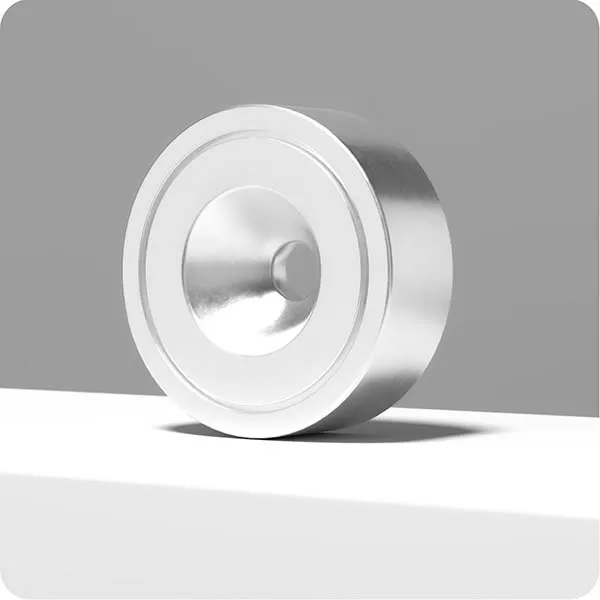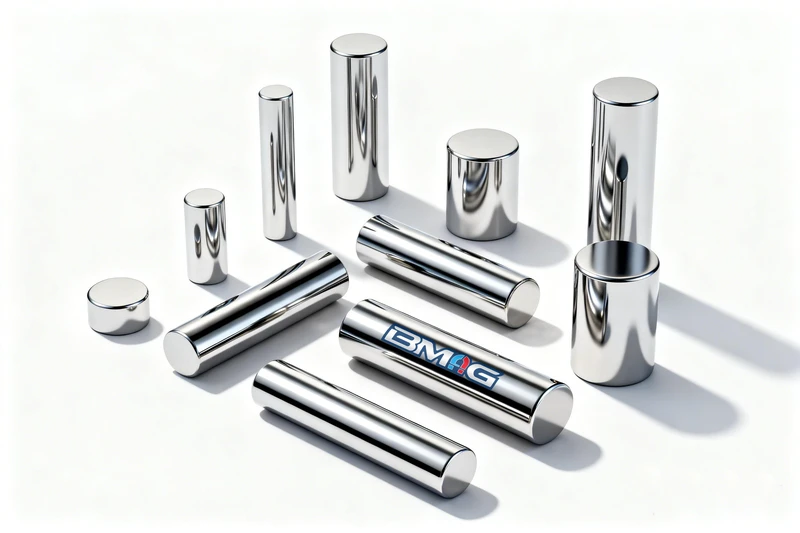









Countersunk magnets and counterbored magnets are both screw-mounted magnetic parts, but they are not interchangeable. A countersunk magnet uses a conical recess for a flat-head screw, allowing the screw head to sit flush or nearly flush. A counterbored magnet uses a flat-bottom cylindrical recess for a socket-head or cap screw. If the hole type does not match the fastener, the screw may sit unevenly, the magnet coating may be damaged, or the brittle NdFeB material may crack during installation.
For buyers sourcing neodymium countersunk magnets, the first question should not be “Which magnet is strongest?” but “Which screw head and mounting surface does the design require?” BMAG’s Neodymium Countersunk Magnets category supports fixtures, automation, cabinetry, and OEM devices with multiple shapes, coatings, temperature grades, and custom options.
Quick Answer: Countersunk vs Counterbored Magnets
| Comparison Point | Countersunk Magnets | Counterbored Magnets |
| Hole geometry | Conical or tapered recess | Flat-bottom cylindrical recess |
| Best screw type | Flat-head screw | Socket-head or cap screw |
| Installation result | Flush or low-profile surface | Recessed cylindrical screw head |
| Main goal | Clean appearance, no protruding screw head | Stable seating for raised screw heads |
| Typical use | Cabinetry, signage, panels, displays, OEM products | Fixtures, equipment, tooling, custom assemblies |
| Main risk | Over-tightening may chip or crack the magnet | Wrong depth or diameter may cause poor screw seating |
What Is a Countersunk Magnet?
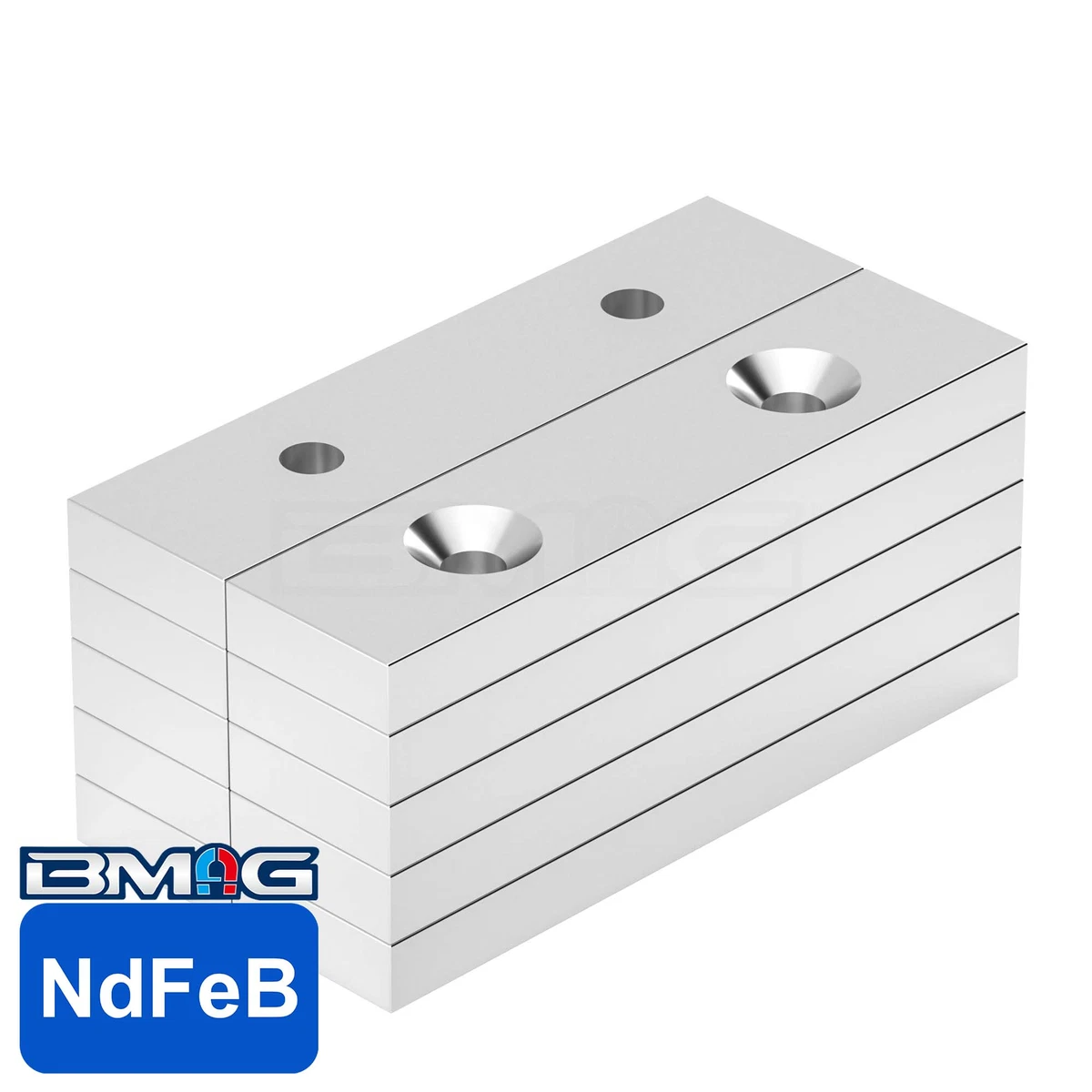
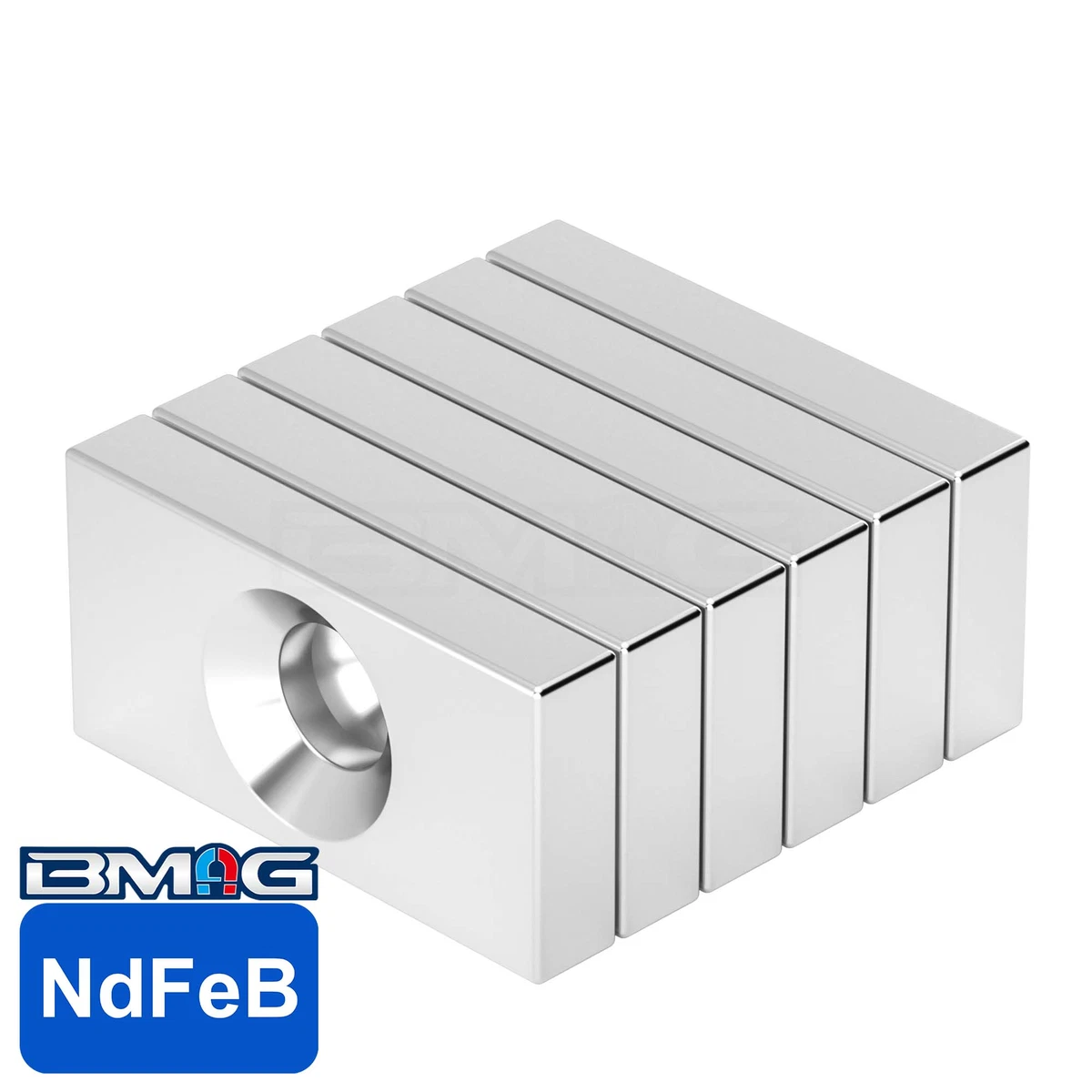
A countersunk magnet is a magnet with a tapered screw recess. The bevel is designed for a flat-head screw, so the screw head can sit flush with the magnet surface. This matters when the assembly must remain smooth, compact, or visually clean, such as a cabinet closure, display panel, access cover, sensor mount, or retail fixture.
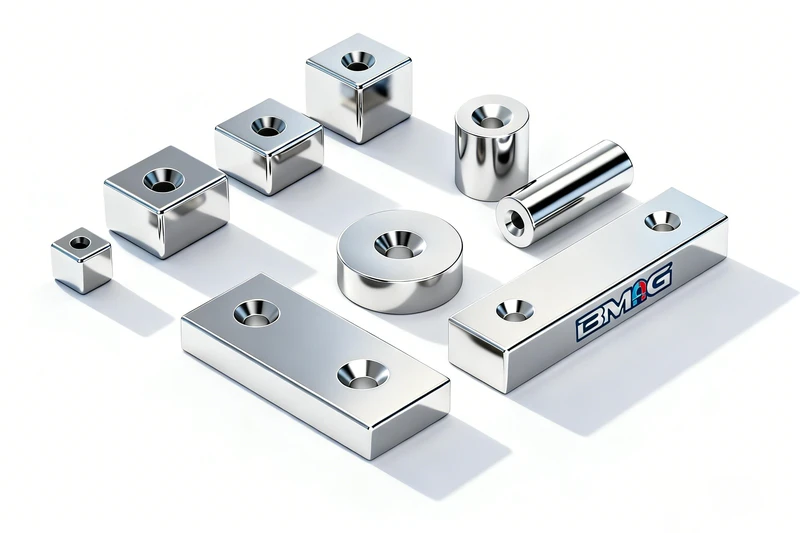
Common versions include round countersunk magnets, countersunk disc magnets, countersunk ring magnets, block magnets with one or two holes, and custom plate-style magnets. Buyers comparing shapes can also review BMAG’s neodymium disc magnets, neodymium block magnets, and neodymium ring magnets before specifying a countersunk design.
What Is a Counterbored Magnet?
A counterbored magnet has a straight cylindrical recess around the hole. It is normally used with socket-head screws, cap screws, or other raised-head fasteners with a flat underside. Instead of using a tapered screw head to create a flush look, the counterbore provides a pocket for the screw head to sit inside.
Counterbored magnets are often more relevant for custom industrial fixtures, tooling, machinery, or assemblies where the screw type has already been fixed by the mechanical design. They are less common as standard catalog magnets and more likely to require a custom drawing.
How to Choose: Start with the Screw Head
The simplest selection rule is this: use a countersunk magnet for flat-head screws and a counterbored magnet for socket-head or cap screws. Do not choose the magnet hole type first and then force the screw to fit. In a magnetic assembly, screw fit affects appearance, clamping stability, coating protection, and long-term reliability.
If the product needs a smooth surface with no raised fastener, a countersunk magnet is usually the better choice. If the product needs a cylindrical screw head protected inside a recess, or if the screw must handle higher tightening force, a counterbored design may be more suitable.
Why This Difference Matters More for Neodymium Magnets
In metal or plastic parts, an incorrect hole feature may often be reworked. In neodymium magnets, that is risky. NdFeB is strong but brittle, and the magnet is usually coated after shaping. Drilling, countersinking, or modifying the hole after coating can create chips, cracks, corrosion paths, or magnetic performance loss.
This is why the hole geometry should be designed before production. A proper drawing should define outer diameter or length and width, thickness, through-hole diameter, countersink diameter, countersink angle or counterbore depth, screw type, countersink side, magnetization direction, coating, tolerance, and working temperature.
Common Mistakes to Avoid
The most common mistake is treating countersunk and counterbored holes as the same feature. A flat-head screw does not seat correctly in a counterbored pocket, and a socket-head screw does not match a tapered countersink. Other mistakes include choosing a hole that is too large, using excessive screw torque, ignoring coating thickness, or selecting a high-strength grade without checking temperature limits.
Thin magnets also need special attention. The recess removes magnetic material and reduces wall thickness around the hole. If the magnet is too thin, too narrow, or too close to the edge, the screw load may concentrate around the hole and increase cracking risk.
Coating, Grade, and Environment
BMAG’s countersunk magnet page lists multiple temperature grades, including N, M, H, SH, UH, EH, and AH options, as well as coatings such as nickel, epoxy, zinc, black nickel, plastic, rubber, PTFE, and gold. These choices affect more than appearance. They influence corrosion resistance, working temperature, abrasion protection, and whether the magnet can survive repeated installation or removal.
For dry indoor use, nickel coating is a common option. For humid, outdoor, or contact-sensitive environments, epoxy, rubber, plastic, PTFE, or another protective coating may be more suitable. The recess area should be protected carefully because screw contact can damage coating if installation torque is too high.
OEM Procurement Checklist
Before ordering countersunk or counterbored magnets, confirm these details with the supplier:
- Screw type: flat-head, socket-head, cap screw, or other fastener
- Hole type: countersunk or counterbored
- Outer dimensions, thickness, through-hole diameter, and recess size
- Countersink angle or counterbore depth
- Countersink side and magnetization direction
- Required grade and maximum working temperature
- Coating and corrosion environment
- Dimensional tolerance and assembly method
- Pull force or holding requirement
- Need for samples, polarity marking, packaging, and inspection documents
How BMAG Can Support Custom Magnet Projects
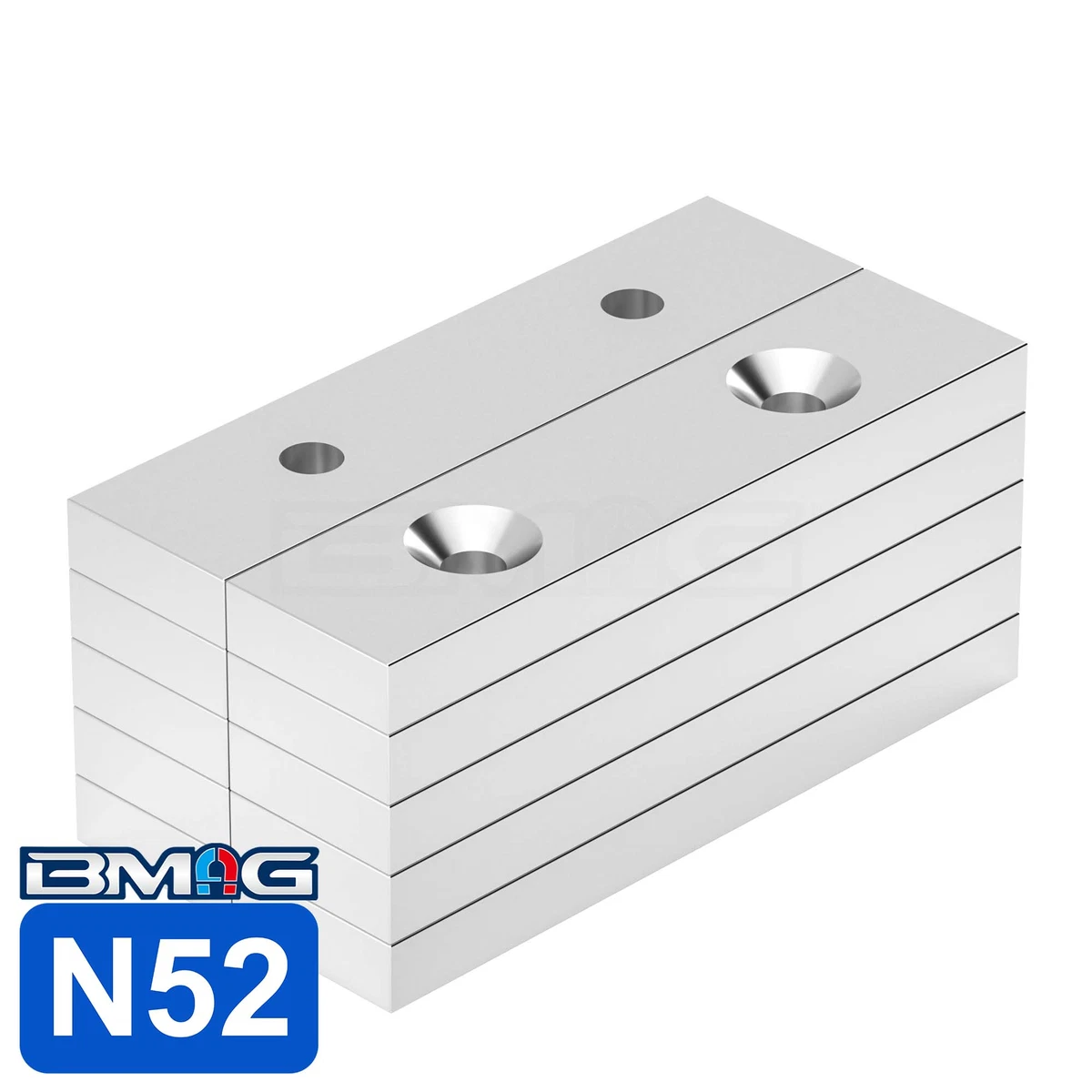
For standard projects, buyers may start from BMAG’s countersunk magnet category. For assemblies with special hole geometry, coating, polarity, or tolerance requirements, custom neodymium magnets may be more appropriate. BMAG’s site positions the company for OEM magnet projects with direct factory supply, in-stock inventory, ISO 9001 and RoHS manufacturing, and configurable magnet solutions.
FAQ
Can I use a countersunk magnet instead of a counterbored magnet?
Only if the screw type and assembly design match. Countersunk magnets are for flat-head screws. If the design uses socket-head or cap screws, a counterbored magnet is usually more appropriate.
Can neodymium magnets be drilled after purchase?
It is not recommended. Neodymium magnets are brittle and coated for corrosion protection. Hole features should be manufactured before coating and magnetization according to the drawing.
Which is better for a clean surface?
A countersunk magnet is usually better when the screw head must sit flush or nearly flush with the surface.
Conclusion
Countersunk magnets and counterbored magnets solve different fastening problems. A countersunk magnet is best for flat-head screws and flush mounting, while a counterbored magnet is better for socket-head or cap screws that need a cylindrical recess. For OEM buyers, the safest approach is to define the screw type, mounting surface, load direction, coating, grade, tolerance, and working environment before ordering. The right magnet is not simply the strongest one; it is the one that fits the mechanical design correctly.